Asbestos is a building material that was outlawed by UK regulators after researchers and medical officials found that those who worked with it later developed serious illnesses. What was first called ‘the world's most wonderful mineral’ later caused mass public harm and, despite its beneficial properties, is now synonymous with a long list of respiratory illnesses and cancers.
Asbestos is a natural silicate material used by humans for over 4000 years. Its natural fibrous property makes it an incredible insulator and fire retardant when used as a building material. Due to these two properties, asbestos was used in roofing, piping, sewage systems, and floor tiles. It was considered a wonder material due to its ability to fortify concrete while being cheap to produce and easy to apply, where needed, in multiple ways.
If you’ve ever worked in an establishment that serves food or you eat out often, you’ll have noticed the colourful sticker displayed in the front window that the Food Standards Agency has issued. This sticker displays the ‘Food Hygiene Rating’ and features a circled number ranging from 0 to 5. You might be wondering what these stickers indicate, who they are issued by, and what can be done to improve these ratings. Find out more with HSEDocs.
Visit any commercial kitchen or catering equipment store and you’ll see a rainbow of chopping boards. But what do the different colours mean? In this article, our experts explain how the colours of chopping boards help reduce the risk of cross-contamination and what each colour is used for.
HACCP is an initialism used in the hospitality industry to manage food hygiene and safety standards across all departments. When working with food, there are several hazards that you will come across that you will need to know how to deal with at every level of experience or responsibility.
So, what is HACCP and why is it important? HACCP stands for Hazard Analysis and Critical Control Points.
What Are The Employers' Duties Under The Manual Handling Regulations?
As an employer, you must clearly understand the following areas to assess the risks involved in manual handling effectively. This outline will provide you with the experience necessary to carry out assessments that ensure safety for you, your team, and members of the public when manually handling objects at work.
What Does AARR Stand For in Manual Handling?
AARR is an initialism used to refer to the core concepts of keeping us all safe when lifting heavy objects. Understanding and following these key concepts can help you assess common risks and learn how to avoid harm when completing a manual lifting task.
What Does TILE Stand For in Manual Handling?
Manual handling covers several tasks, including lifting, pushing, pulling, or carrying large and heavy objects. If you are doing any of the tasks outlined above, you must consider ‘TILE’ beforehand. The TILE acronym stands for Task, Individual, Load, and Environment. I.e, each of the factors that you should assess and consider from a health and safety standpoint.
We’ve outlined a few of the questions that you could ask yourself when considering each TILE in manual handling:
So, what are the Key Working At Height Rules?
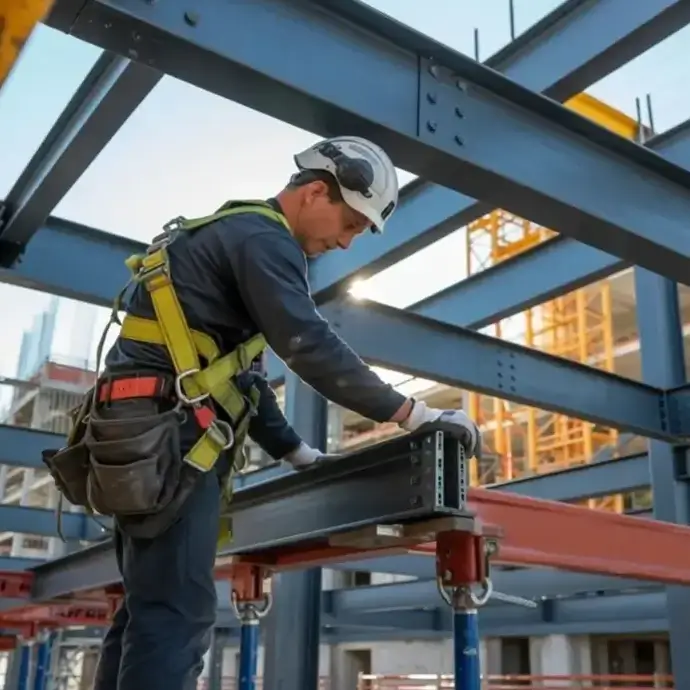
The Key Working at Height Rules are based on common-sense guidelines for employers to assess the professional competency of employees and the adequacy of the equipment used. Height, surfaces, harnesses and tools all play a part in assessments, as does any possible risk of injury to the public.
What are the most common manual handling risk factors? The most common risk factors for manual handling include:
Personal capabilities such as strength, height, underlying health conditions, or pregnancy
The environment, including tripping hazards, space available, and visibility when moving the object
The object itself, including weight, shape, size, temperature, and how delicate it might be