
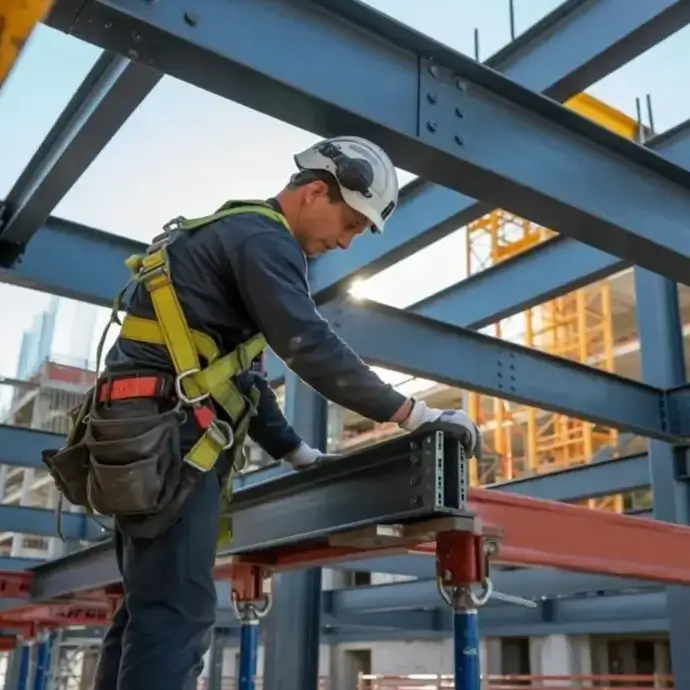


What is Covered in Working at Height Training? What You Need To Know.
This guide provides valuable information for protecting yourself and your workforce when working at heights. The content is fully aligned with current regulations established in the Working at Height Regulations (WAHR) 2005. It is designed to empower you to exercise due diligence, especially in scenarios where you or your team face potential risks.
Understanding the key principles outlined in this guide for working at height training will enhance safety and help prevent serious injuries. Safe practices and grasping regulatory elements of training are vital across many sectors, where work is conducted at height.
Key topics covered with working at height training provide a framework of straightforward guidelines that enable individuals to evaluate both the professional competency of employees and the sufficiency of the equipment utilised. Assessments should take into account various factors, including the height of the work, the nature of the surfaces involved, the types of harnesses and tools used, and any potential risk of injury to the public.
Key areas of importance include:
- Definition: "Working at height" refers to any task conducted above ground level or where an individual could fall and sustain injuries. It encompasses activities performed on ladders, scaffolding, rooftops, or any elevated surfaces. It is worth noting that a fall from height can also involve falling into an excavation. Understanding the fundamental regulations regarding working at height is essential to create a safe working environment for you and your employees.
- Importance of Working at Height Training: Training for working at height is indispensable for individuals whose job responsibilities include tasks that carry the risk of falling, even if the distance is minimal. The training emphasises recognising hazards, implementing secure working practices, and ensuring compliance with the necessary regulations.
- Risk Assessment: Working at height training helps individuals identify the potential hazards associated with elevated tasks. Participants learn how to conduct risk assessments tailored to specific tasks, including evaluating the work environment and identifying variables that could contribute to falls.
- Safe Working Practices: Working at height training gives instructions on the procedures required for safe operations at height, including the selection and proper use of equipment, adherence to safety protocols, and maintaining situational awareness while working in elevated conditions.
- Equipment Selection: This focuses on gaining an understanding of various types of equipment, including ladders, scaffolds, and fall arrest systems. Training may include inspection methods, usage techniques, and maintenance routines to ensure safety and effectiveness.
- Legal Obligations: Participants learn about the legal responsibilities under the Working at Height Regulations 2005 and other relevant laws. This includes liability, reporting requirements, and maintaining accurate records of training and incidents.
- Emergency Procedures: This area encompasses the necessary responses to potential or actual accidents or emergencies that may occur while working at height.
Working at Height Training: Helping you Understand the Risks and Precautions
Working at height encompasses any scenario where a fall might occur that could lead to injury, influenced by the height from which a person is working. This definition is critical for ensuring safety in various occupational settings. Here are specific situations that are categorised as “Working from Height”:
- Use of Ladders: Using ladders for tasks is classified as working at height and has a high potential for falls, as ladders are temporary access equipment and not a designed structure, such as scaffolding. Falling risks are mainly due to ladder instability, overreaching, or slipping, often caused by insufficient training. While ladders are a common tool for working at height, they can be dangerous if not used properly. Taking precautions, such as ensuring a stable setup, avoiding overreaching, and being aware of environmental factors, can significantly reduce the risk of falls and injuries. If a job requires working at heights for more than 30 minutes or poses a high risk, safer alternatives should be considered.
- Working Around Openings: This presents a significant risk of falls from height, as these unguarded areas create a direct and perilous path for individuals to fall. Without adequate safeguards such as guardrails or barriers, a fall through an unprotected opening can result in severe injuries or even fatalities. Situations where individuals are positioned over openings may include loose or removed floorboards, manholes, or any unguarded hole in the ground. The risk of falling increases because individuals often don’t perceive that they are working at height, so are less aware of the dangers and more relaxed about the risks, increasing the chance of them stepping backwards into unnoticed danger if adequate coverings or guardrails are not in place.
- Fragile Surfaces: Working on or near materials or structures such as certain types of roofs, fibre-cement, or rooflights can pose risks if they are not designed to support the weight of individuals or the load of tools and materials. These surfaces increase the potential for accidents. The Health and Safety Executive (HSE) reports that falls through fragile surfaces, particularly those involving fibre-cement roofs and rooflights, contribute to approximately 22% of all falls from height incidents. The potential for collapse and the high consequences of falling through a fragile roof covering emphasise the need to avoid such work where possible, use specialised access equipment if the work can't be avoided, implement load distribution techniques and use fall protection measures.
- Scaffolding and Temporary Structures: Any work conducted on scaffolding or temporary access equipment requires careful planning and safety measures to mitigate fall risks. Although the access equipment used is classified as a designed system, it is only ever 100% safe from the risk of individuals or tools/loads falling if all systems are in place and all rules followed.
Some things that may affect the safety of access equipment include:
-
Inadequate safety precautions, such as kick boards or guard rails
-
Unauthorised access by untrained staff
-
Unsafe working practices
-
Defective or misused equipment
-
Alterations to access equipment made by an untrained individual
-
Poor access gates
-
Inadequate or poor design
-
Inclement weather
- Mobile access equipment and MEWPs: Working with Mobile Elevating Work Platforms (MEWPs) involves several risks, including overturning, entrapment, falling objects, and collisions. These hazards often arise from operator error, inadequate maintenance, or unstable ground conditions. Overturning can occur if MEWPs are positioned on sloped surfaces, overloaded, or experience hydraulic failures. Entrapment may happen in confined spaces if the platform moves unexpectedly. Collisions with pedestrians, vehicles, or overhead structures highlight the importance of effective traffic management and situational awareness. To prevent injuries below, it is crucial to secure all objects on the platform during movement. Additionally, contact with power lines poses a severe risk, necessitating a safe distance from them. Ground stability is also a key factor in MEWP safety, making thorough site assessments essential before operating the machine.
- Use of Harnesses and Ropes: Using safety harnesses, ropes, or other fall protection equipment can have their inherent dangers, which may include:
-
Suspension Trauma - This is a serious condition that can arise when a person is suspended in a harness or similar device for an extended period without the ability to move. It occurs due to blood pooling in the legs, which reduces blood flow to the heart, lungs, and brain. This can lead to potential organ damage and even death.
-
Entanglement and Trapping - The risk of entanglement is a significant concern when working at heights. Ropes, webbing, or other equipment can easily catch on clothing, limbs, or nearby structures, increasing the likelihood of injuries or entrapment.
-
Equipment Failure - The integrity of equipment is paramount; even well-maintained gear can fail under the immense forces exerted during a fall. The potential consequences of equipment failure are dire, as they can result in catastrophic falls, leading to serious injuries or fatalities.
-
Rope Burns - When ropes or webbing come into contact with exposed skin, they can cause painful and severe friction burns.
-
Manual Handling Injuries - Climbing and manoeuvring with equipment can result in strains, sprains, and other manual handling injuries. Proper lifting techniques and body mechanics are essential to minimise these injuries.
Regulations and Working at Height Training
If you employ people who work at heights in your field, then yes, these rules apply to you. It is up to those in charge to assess the safety of equipment, the competency of those involved in working at heights, and the training involved if the necessary competency isn’t met.
We outline these two key factors below:
Competency
You are responsible for understanding these regulations, assessing the correct practices, and ensuring competent individuals carry them out. If training is being carried out, then competency goes up the chain of command. In this case, the trainer's competency, as well as their practices, will need to be assessed.
Likewise, ensure that everyone associated with the tasks at hand is familiar with the rules of working at heights, as falls can sometimes involve passersby or members of the public. Ultimately, the person assessing ensures that best practices are followed.
Training
The person in charge ensures that personnel working at heights are suitably trained. If training is being carried out, then it is up to them to competently carry out the training. According to the Working at Height Regulations (2005), it is not possible to work at height without suitable training, as mandated by the Health and Safety at Work Act (1974).
If you think you need Training for Working At Height, read our other, more detailed blog. It offers a full spectrum of information and guidance for anyone wanting to train to Work At Height.
To get certified in Working From Heights, complete our online training course.