
UPVC fitters health and safety RAMs pack. BEST OFFER
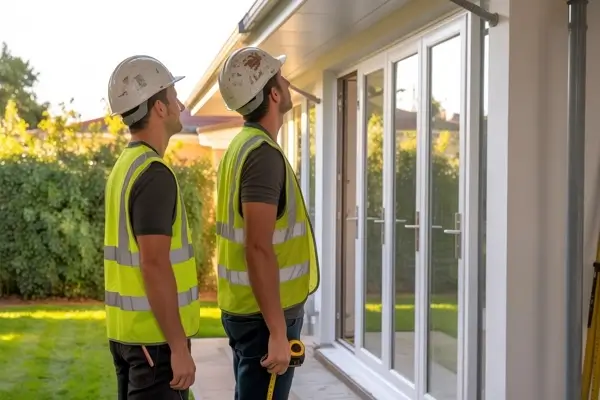
All the RAMS you need for window and door fitting. A complete H&S package just £65.00

 |
 |
 |
|
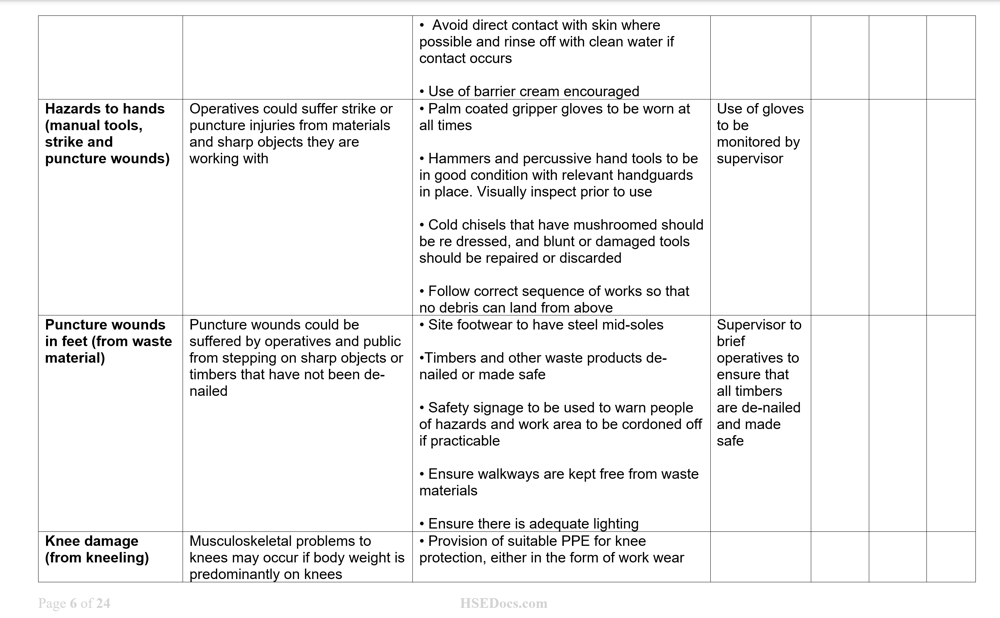
Sample 1 |
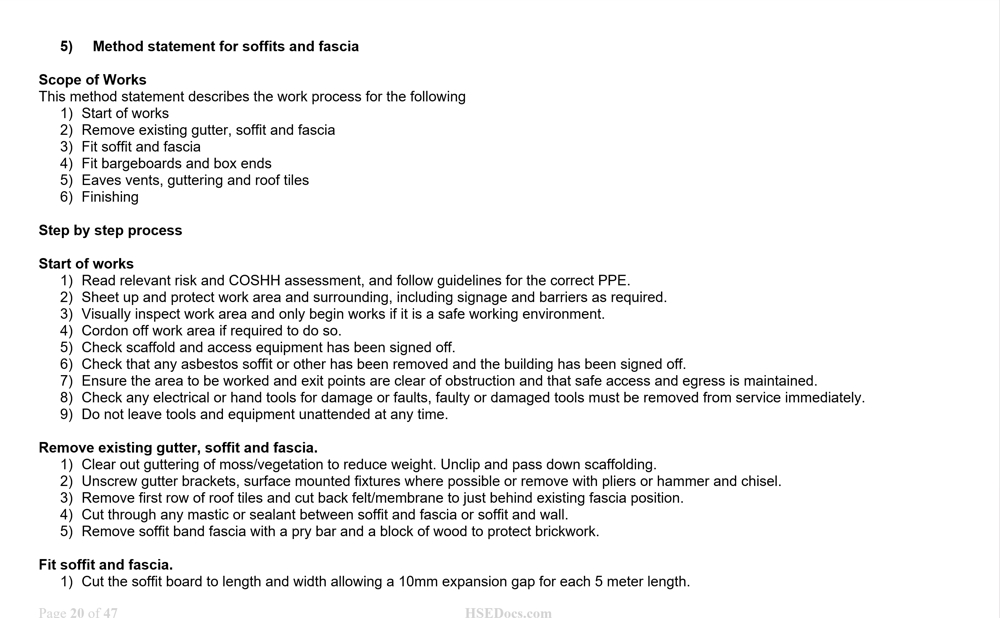
Sample 2 |
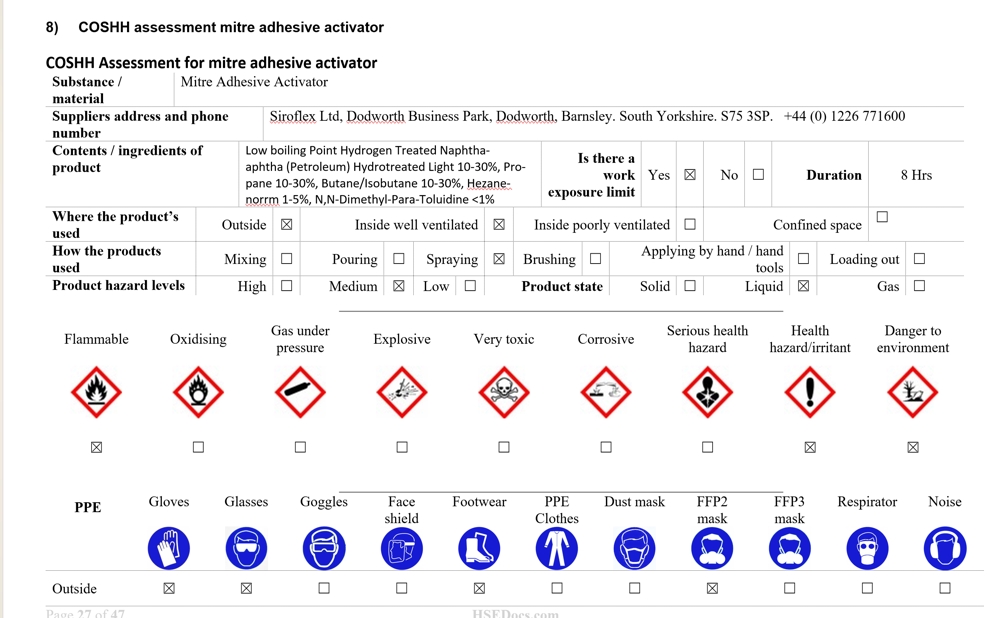
Sample 3 |
What are RAMS for UPVC fitters?
Window fitters encounter significant health and safety risks in their line of work, with the most pressing concern being falls from height. This risk arises when working on ladders, scaffolding, or elevated platforms, making it crucial for fitters to adhere to strict safety precautions. Additionally, the manual handling of heavy glass units and window frames poses a risk of injuries, such as sprains, fractures, or even long-term musculoskeletal disorders, especially when proper lifting techniques are not employed.
Some of the Key Risks for Window Fitters Include:
Falls from Height: Falls remain one of the leading causes of workplace accidents within the window fitting sector. These incidents can happen not only from ladders but also from scaffolding or other elevated work platforms, often leading to serious injuries or fatalities. It is essential to use fall protection equipment, including harnesses and guardrails, to reduce this risk.
Manual Handling Injuries: The labour-intensive process of lifting and positioning heavy window units can cause acute injuries such as sprains, strains, and long-term musculoskeletal problems. Proper training in ergonomic handling techniques, along with the use of mechanical aids, can greatly reduce the risk of such injuries.
Cuts, Abrasions, and Eye Injuries: The risk of cuts and abrasions is common when handling glass and sharp tools. Fitters must wear suitable personal protective equipment (PPE), such as cut-resistant gloves and safety goggles, to protect against injuries caused by sharp edges or flying debris during cutting and installation processes.
Slips, Trips, and Falls: Worksites that are cluttered or poorly organised can pose significant slip and trip hazards. Tools, materials, and uneven surfaces increase this risk, highlighting the need to keep work areas clear and safe and to follow proper housekeeping procedures.
Falling Objects: The danger of objects falling from height is amplified during installation processes. This can include tools, glass panels or components. Implementing measures, such as securing tools and equipment when working at heights, can help mitigate this risk.
Exposure to Hazardous Substances: Window fitters may encounter hazardous substances, including asbestos (in older structures), silica dust, and chemical solvents. Adequate protective gear, along with proper ventilation and dust suppression techniques, are essential to minimise exposure to these harmful agents.
Repetitive Strain Injuries: The repetitive nature of tasks such as lifting, bending, and manual assembly can cause chronic pain and injuries like tendonitis or carpal tunnel syndrome. Taking regular rest breaks, rotating tasks, and using ergonomic tools can help reduce some of these strain-related problems.
Due to the inherent risks in the construction industry, it is a legal requirement to produce Risk Assessments and COSHH Assessments, and many contractors also request method statements. Together, these documents are colloquially known as RAMS, and here is a brief overview of each one:
Risk Assessments: A window fitter's risk assessment is a document that identifies potential hazards and risks during window installation or replacement and outlines the control measures needed to eliminate or reduce them to a safe level. It helps fitters understand risks to themselves, colleagues, and others, and specifies safety procedures such as the use of personal protective equipment (PPE), safe ladder use, and proper manual handling techniques to prevent injuries from sharp glass or falls.
Method Statements: A window fitter's method statement is a detailed document that outlines, step-by-step, how a window installation project will be executed. It covers procedures, equipment, risks, and safety measures involved in removing old windows and fitting new ones. It acts as a guide to ensure the work is completed safely, efficiently, and to the required standards, specifying the sequence of tasks, materials, tools, personal protective equipment (PPE), and any site-specific rules or restrictions.
COSHH Assessments: A window fitter's COSHH (Control of Substances Hazardous to Health) assessment identifies, evaluates, and controls risks from hazardous substances used during window installation, such as sealants, cleaning agents, and dust from old materials. The assessment involves listing hazardous substances, understanding their potential for harm, assessing the actual risk in the work environment, and applying controls like personal protective equipment (PPE) and safe handling procedures to prevent exposure.
GET THIS DOCUMENT
£65.00+VAT
- Available in Word™
- Fully customisable
- Add your Company Logo
- UK & EU Compliant