
Cleaners health and safety RAMs pack. BEST OFFER
Need to hand in RAMs for cleaning and want something to cover all bases? A complete H&S package for just £65.00

 |
 |
 |
|
Sample 1 |
Sample 2 |
Sample 3 |
What are RAMS for Cleaners?
Cleaning duties usually include sweeping, mopping, dusting, and vacuuming floors, surfaces, and furniture to remove dirt, dust, and allergens, as well as cleaning and sanitising kitchens and bathrooms, where cleaners pay special attention to ensure that restrooms are thoroughly cleaned, sanitised, and well-stocked with essential supplies, including toilet paper, soap, and sanitary products.
During their work, cleaners face a high risk of experiencing slips, trips, and falls, primarily when they work on wet floors or with trailing leads. This is one of the most common hazards faced by cleaners, and it is often compounded by the fact that they must move around as they clean, making it difficult to focus on the floor surface. As a result, cleaners must take extra care to ensure that they are working safely and minimise the risk of injury.
Apart from the obvious physical risks that can cause accidents, there are also various biological hazards that can result from exposure to human waste products, mould, and fungi. Additionally, chemical hazards may stem from the cleaning agents used to sanitise surfaces, and potential dangers may come from the materials or substances being cleaned. All these factors must be taken into account to ensure a safe and healthy environment.
RAMS for cleaning companies include three types of documents, and it’s interesting to note that the last document was added to RAMS after the acronym had been created for Risk Assessments and Method Statements. The additional document is a COSHH Assessment, which informs workers about potential hazards from using or coming into contact with substances at their workplace. These substances are often chemical-based, such as cleaning agents, but also include, amongst other things, dust and materials that need to be cleaned.
Cleaners' RAMS need to focus on preventing slips, trips, and falls, using Personal Protective Equipment (PPE) such as gloves and masks, proper chemical handling to avoid exposure, safe operation of electrical and heavy equipment, correct manual handling techniques to prevent strains, and overall infection control.
To create safe working practices, the inherent risks are included in cleaners' RAMS by using the following documents.
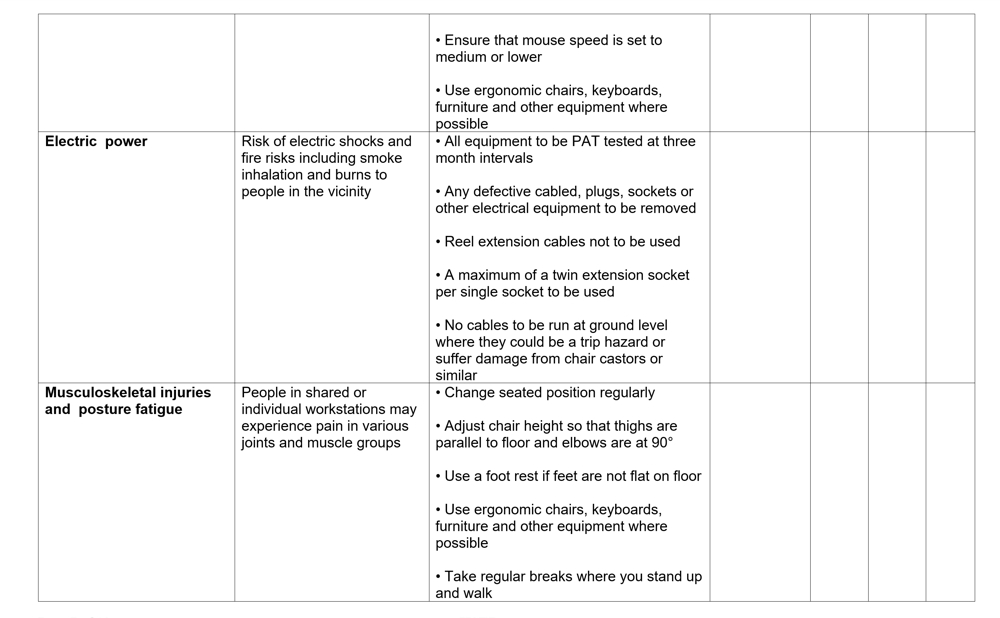
Risk Assessments: These documents involve a structured approach to identifying possible hazards, assessing the probability and potential impact of adverse outcomes from those hazards, and determining appropriate measures to eliminate or mitigate those risks.
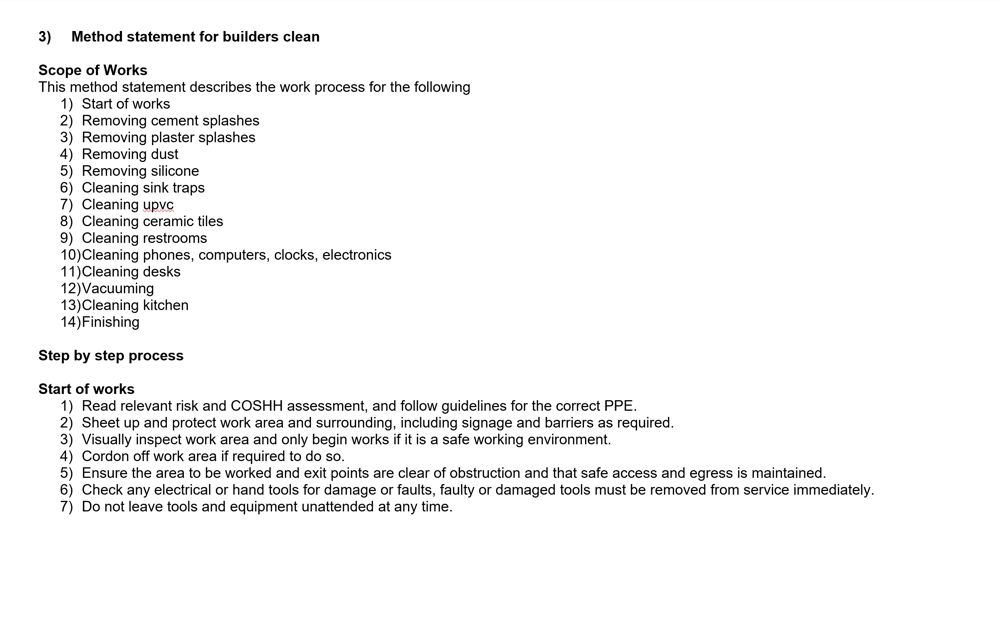
Method Statements: A method statement contains detailed, step-by-step instructions that describe how a specific task will be performed safely and effectively. It outlines the procedures, safety measures, required equipment, and responsibilities involved, ensuring that potential hazards are recognised and managed.
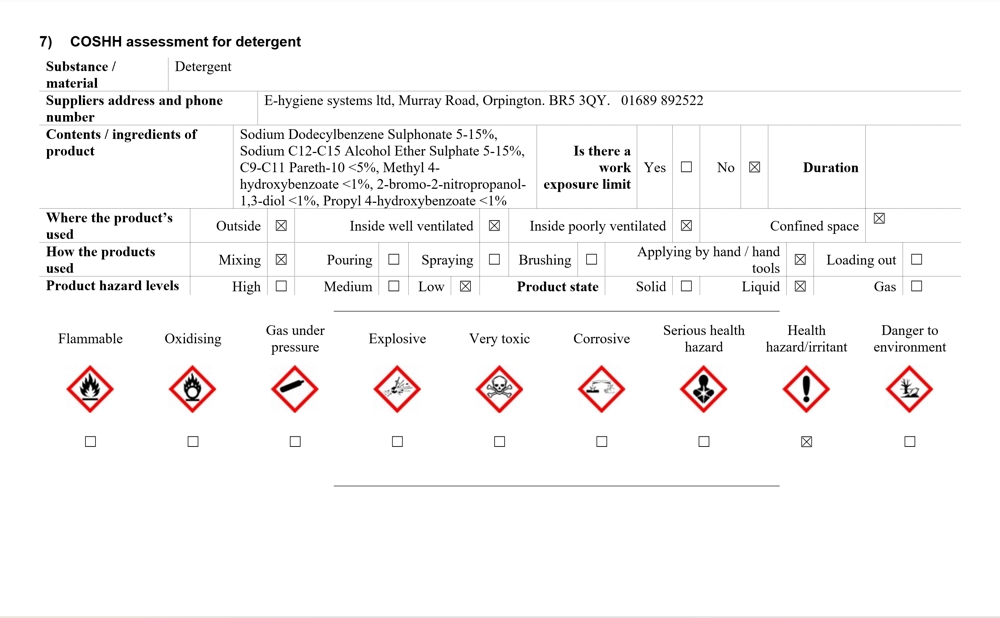
COSHH Assessments: COSHH stands for Control of Substances Hazardous to Health. It is a comprehensive assessment that identifies and manages the risks from substances hazardous to health in a workplace. It involves detecting hazardous substances and the work activities that may lead to exposure, evaluating the potential harm, and implementing control measures such as Personal Protective Equipment (PPE) or ventilation to prevent or reduce the risk of harm to employees of any other person who may be affected by the work process.
Key areas of concern addressed by health and safety for cleaning include:
Slips, Trips, and Falls Prevention: Immediate Spill Management. Quickly clean up any spills to prevent accidents. Use absorbent materials like mops or paper towels to thoroughly dry the area. Regularly inspect high-traffic zones for potential wet or slippery surfaces.
Clear Signage: Place "Wet Floor" signs clearly in the affected areas to warn people of potential hazards. Make sure these signs are easily visible and positioned to allow sufficient space for safe movement around the wet areas. Also, use warning cones to block off areas that might cause slipping.
Designated walkways: Avoid walking or standing on wet surfaces. When possible, stick to designated pathways and avoid shortcuts through damp areas. Also, keep walkways clear by regularly removing clutter or obstacles such as bags, boxes, or equipment that could pose tripping hazards.
Personal Protective Equipment (PPE) Considerations
Gloves: Always wear suitable gloves that are resistant to the specific chemicals or materials you are handling. Ensure a comfortable fit and check for any signs of damage or wear before use.
Eye Protection: Wear safety goggles or face shields to protect against chemical splashes.
Masks: Choose respiratory protection based on the inhalation risks present, ensuring it is the appropriate type (e.g., N95 respirators for particulate matter or chemical masks for volatile substances). Make sure masks fit correctly to prevent air leaks..
Non-Slip Footwear: Wear closed-toe, non-slip shoes or boots to reduce the risk of slips, trips, and falls, especially in areas where spills could happen. Make sure footwear suits the specific work environment (e.g., oil-resistant soles, steel-toed protection)..
Chemical Safety Considerations
Cleaning Agents: Strictly follow established protocols for handling, storing, and disposing of cleaning chemicals to prevent accidents and injuries. This includes wearing appropriate personal protective equipment (PPE), such as gloves, goggles, and masks, to reduce exposure.
COSHH Assessments: Consult and make use of COSHH Assessments for each cleaning product. These sheets offer essential information on chemical properties, potential hazards, protective measures, and emergency procedures, ensuring all users are aware of the risks linked to the chemicals they handle..
Equipment Considerations
Plant and Machinery: When working with electrical equipment, it is crucial to exercise caution to prevent the risk of electric shock or fire hazards. Always check that your tools and machinery are properly maintained and in good working condition, including inspecting electrical leads for any frays, cracks, or signs of wear that could lead to dangerous situations.
Training: Before operating any equipment, ensure you have received proper training and understand the correct usage protocols to enhance safety. Familiarise yourself with the manufacturer's instructions and safety guidelines specific to each piece of equipment. Additionally, always wear personal protective equipment, such as gloves and goggles, when necessary, and maintain a safe distance from live wires and connections.
Manual Handling Considerations
Lifting and lowering: To effectively prevent back injuries and strains, it is important to use proper lifting techniques. Always evaluate the weight and size of the load before lifting. If it is too heavy or awkward, seek help or use suitable lifting equipment. When lifting, bend your knees and keep your back straight, engaging your core muscles to support your spine. Lift with your legs, not your back, and avoid twisting your body during the lift to reduce stress on your back.
Transporting Loads: For transporting heavy bags and equipment, use trolleys or sack trucks whenever possible. These tools not only help in moving items but also distribute the weight more evenly, greatly lowering the risk of injury.
Tool Choice: Using long-handled tools can significantly reduce the need for excessive bending and stretching. By extending your reach, you can keep a more upright posture, lessening the strain on your back and fostering a safer working environment.
Infection Control Considerations
Personal hygiene: Make sure hands are washed thoroughly with soap and warm water for at least 20 seconds, especially after handling waste, chemicals, or any surfaces that may be contaminated. If soap and water are not available, use an alcohol-based hand sanitiser containing at least 60% alcohol.
Sanitation: Adhere to established protocols for cleaning and disinfecting all surfaces. This includes using appropriate cleaning agents that are effective against pathogens, ensuring the area is properly ventilated, and following the manufacturer's instructions for use, including contact time for disinfectants.
GET THIS DOCUMENT
£65.00+VAT
- Available in Word™
- Fully customisable
- Add your Company Logo
- UK & EU Compliant