
Construction company, health and safety RAMs pack. BEST OFFER
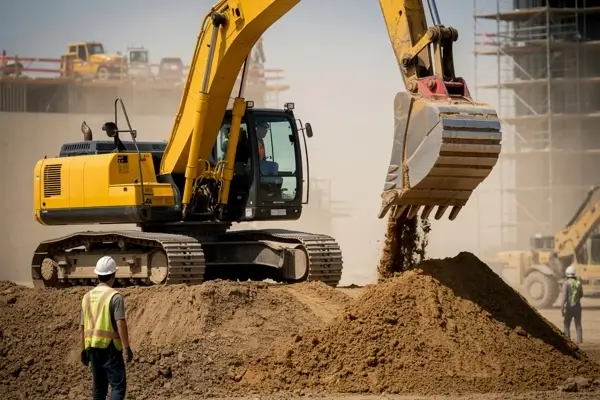
All the RAMs a construction company needs in one simple-to-use document.

 |
 |
 |
|
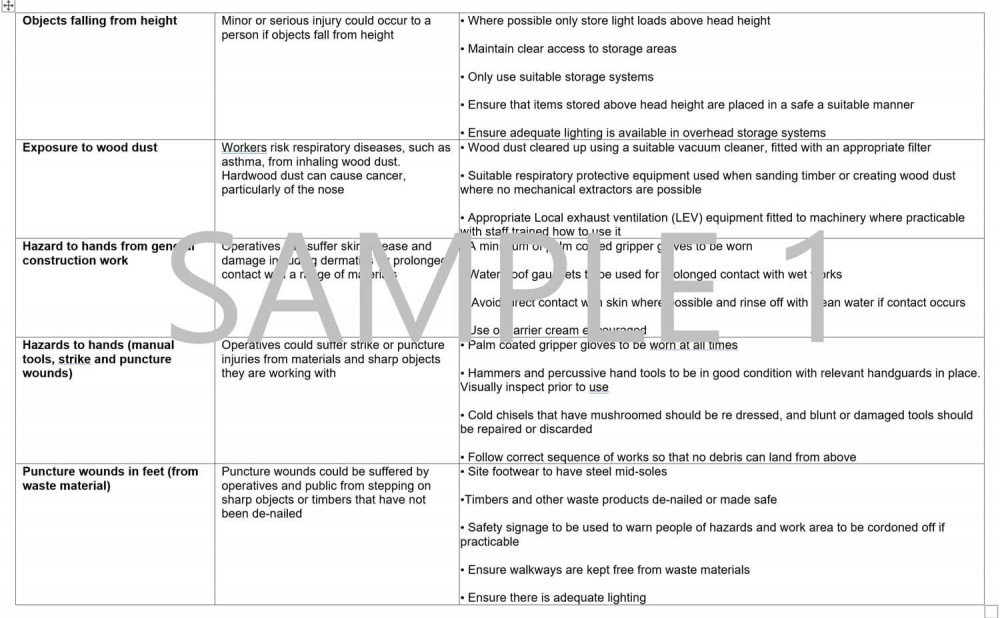
Sample 1 |
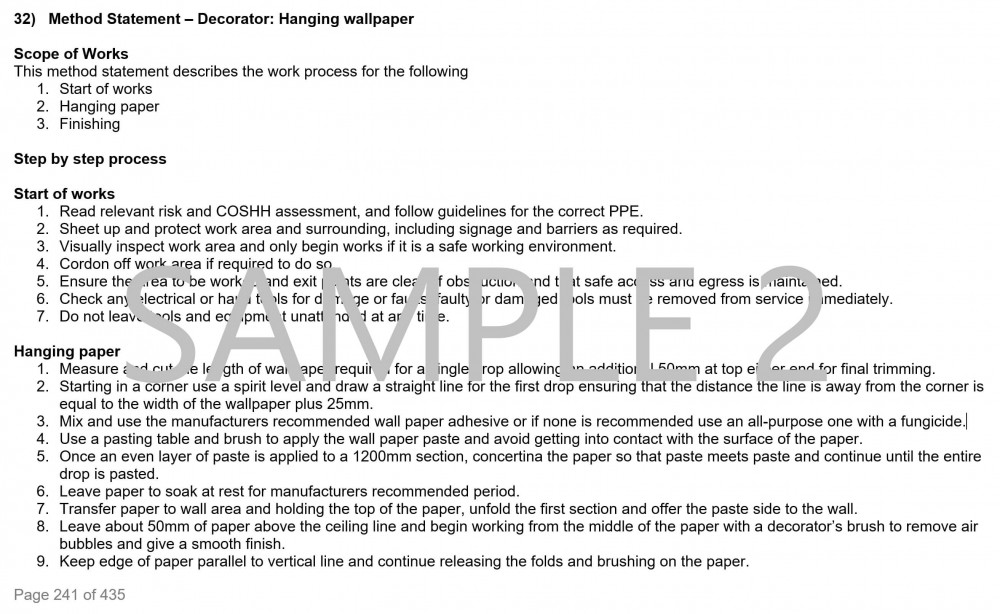
Sample 2 |
Sample 3 |
What are RAMS for the Construction Industry?
Construction companies play a vital role in building and maintaining a wide range of structures, from homes to complex industrial facilities and key infrastructure such as motorways and bridges. These firms manage projects through all stages, starting with initial planning and design, moving through construction, and concluding with project completion. A construction company must have RAMS in place for all aspects of its work.
Their responsibilities cover a broad scope of services, including architectural design, project management, renovation, repair, and ongoing maintenance. Each project is customised to meet specific requirements, ensuring that structures meet aesthetic and functional standards while complying with safety regulations and building codes. Additionally, the work is carried out with all necessary H&S documentation prepared.
Besides constructing new buildings, construction firms often undertake major renovations, adapting existing structures to meet modern needs or extend their lifespan. They also provide maintenance services to keep infrastructure such as roads, bridges, and airports safe and operational.
Specialisation is common within the construction sector, with certain companies focusing on niche areas like residential development, commercial projects, or large-scale industrial ventures. Some firms may also specialise in specific types of structures, such as skyscrapers or renewable energy installations, enabling them to develop expertise in those areas.
Effective resource management and the implementation of H&S RAMS are essential for the successful delivery of any construction project. Companies carefully oversee the allocation and use of labour, materials, and machinery to ensure deadlines and budgets are met while maintaining high-quality standards. Coordinating these resources efficiently is vital for managing the complexities of construction and achieving successful outcomes.
Health and Safety regulations are not merely legal obligations but critical pointers to safeguard individuals in various settings. Everyone's safety is at risk, from permanent staff to temporary workers, self-employed individuals, and visitors such as delivery personnel. Today, businesses are responsible not only for the safety and well-being of their employees but also for anyone affected by their activities or premises. It is therefore paramount that companies take H&S responsibility seriously and ensure their operations do not cause harm to others.
The construction sector, in particular, is high-risk, with approximately 50,000 injuries and an average of 30 fatalities reported annually. These figures, reflecting current H&S measures, remain alarmingly high, underscoring an urgent need for enhanced health and safety management and having RAMS in place, to significantly reduce these numbers. Consequently, risk assessments, method statements, and COSHH assessments have become standard practice, even for smaller companies.
Falls from height account for about half of all fatalities, and the breakdown of the 50,000 non-fatal injuries is as follows:
- Slips, trips, and falls on the same level account for 25%.
- Falls from height account for 18%.
- Manual handling injuries make up 20%.
- Being struck by a moving or flying object accounts for 10%.
It’s important to remember that the reported 50,000 injuries are lower than the actual number of incidents, as many slips or falls happen without injury.
What health and safety measures are needed for a construction company?
All employers are responsible for the safety and well-being of their staff and anyone affected by their business activities or premises. Occupational health and safety rules apply across industries, but the construction sector has the most rigorous requirements. The safety measures that companies must follow depend on the specific nature of their work. For instance, some employees may need permits for confined space work, hot works, or working at heights. Others may require scaffold inspections or need to carry out CAT and Genny tests before excavation.
As a general rule, though, the four primary documents you need are:
A Company Health and Safety Policy - A health and safety policy document is a vital tool that outlines how your business manages health and safety at the workplace. It is mandatory to have this policy if exactly five or more employees work for your organisation. The document should provide a clear and comprehensive overview of the procedures and measures your business has in place to ensure everyone’s safety and well-being at work. By having a well-crafted health and safety policy, you can demonstrate your commitment to maintaining a safe work environment while complying with legal requirements.
Risk Assessments - Risk assessments are essential for ensuring individuals’ safety while performing a task. They evaluate the potential risks involved and propose necessary control measures to mitigate those risks. Control measures guide workers on how to perform tasks safely and avoid possible harm. These instructions are crucial in reducing the likelihood of accidents and promoting a safer work environment for all.
Method Statements - Just as Ikea's instructions make furniture assembly easier for everyone by incorporating visual cues like ticks and crosses, method statements in the construction industry provide step-by-step guidance to ensure tasks are completed safely. Although these statements are usually text-based, they are designed to help workers carry out their tasks without compromising safety. Sometimes, suppliers offer method statements for installing specific items like locks, and it is advisable to follow the manufacturer's instructions to ensure the task is done correctly and safely.
COSHH Assessments - When handling certain products, understanding their risks is vital. A COSHH (Control of Substances Hazardous to Health) assessment is created using the product data sheet supplied by the manufacturer. However, the assessment covers not only the worker’s health but also considers environmental impact, safe disposal, recommended usage, firefighting measures, harmful ingredients, PPE, and first aid procedures. Considering all these factors, the COSHH assessment helps ensure that the product is used safely and responsibly. Principal contractors and project managers may also require additional documentation, such as training records, traffic management plans, anti-slavery policies, and other policies.
GET THIS DOCUMENT
£245.00+VAT
- Available in Word™
- Fully customisable
- Add your Company Logo
- UK & EU Compliant