
Bricklayers health and safety RAMS pack. BEST OFFER

Building a wall, a house or an extension? These are the RAMs for you. A complete H&S package for just £65.00.

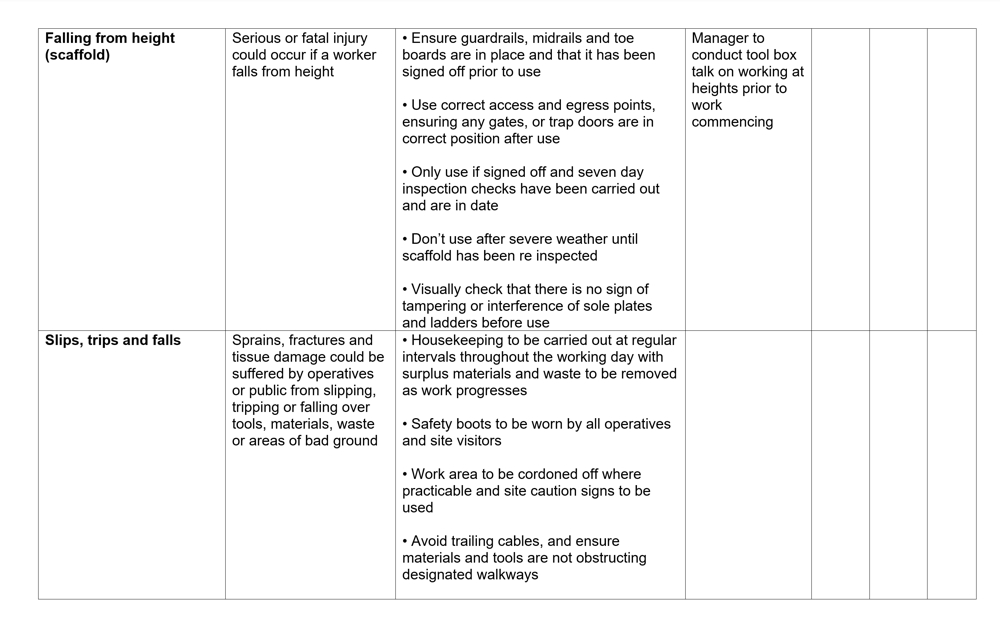 |
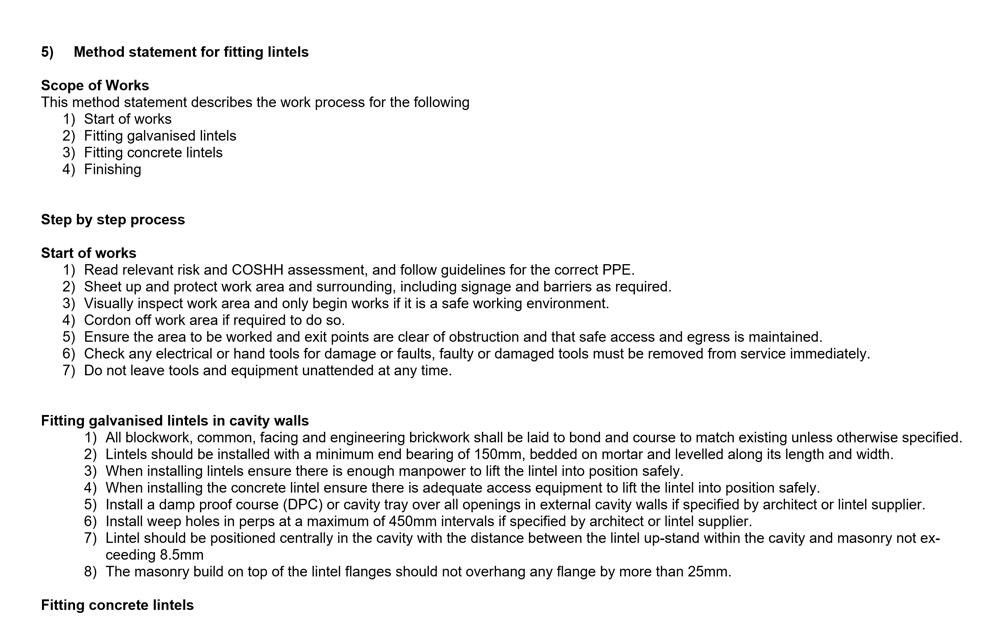 |
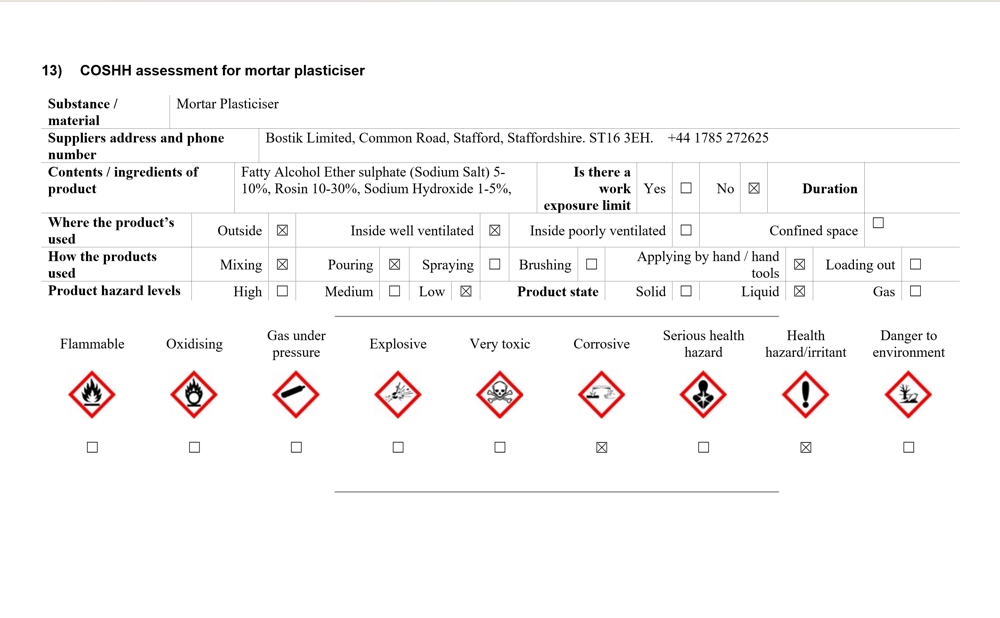 |
|
Sample 1 |
Sample 2 |
Sample 3 |
What RAMS do Bricklayers Need?
Bricklayers require health and safety documentation to ensure their work adheres to UK health and safety legislation, which is crucial for safeguarding their well-being against serious injuries and harm. Such documents play a vital role in the prevention of conditions such as occupational lung diseases, which can arise from prolonged exposure to hazardous work environments.
Key documents include Method Statements, which outline the specific procedures for each task; Risk Assessments, which systematically identify potential hazards and evaluate the risk levels associated with them; and COSHH Assessments (Control of Substances Hazardous to Health), which address the risks posed by exposure to hazardous substances such as dust and chemicals used on-site.
Furthermore, these health and safety documents not only protect the bricklayers but also serve as a formal record of safe working practices. This documentation is essential for building confidence and enhancing the company's reputation among clients and stakeholders, showing a commitment to high safety standards and legal compliance.
The three document types included in RAMS are:
Risk Assessments: A bricklayer’s risk assessment is a systematic process aimed at identifying potential hazards in the work environment, analysing associated risks—such as falls from height, manual handling injuries, or exposure to hazardous substances—and implementing control measures to either eliminate or reduce these risks to a safe level. This process involves thorough documentation of hazards and controls to ensure compliance with safe working practices, thereby protecting bricklayers from harm. Conducting a risk assessment for bricklaying activities involves formally identifying hazards that could cause injuries or health issues, including slips, trips, falls, injuries from manual handling of heavy materials, cuts and abrasions from bricks and tools, skin irritation or burns from cement and mortar, dust inhalation, and risks from noise, vibration, and falling objects. Control measures include the use of Personal Protective Equipment (PPE), keeping the worksite clean and organised, providing proper training, ensuring correct operation of equipment, and using mechanical aids where possible.
Method Statements: A bricklayer's method statement, or Safe Work Method Statement (SWMS), is a detailed, step-by-step guide that explains how to carry out a bricklaying task safely and effectively. A method statement is a comprehensive document that outlines how a specific task, especially a high-risk one, will be completed safely. It identifies potential hazards, specifies necessary safety precautions and control measures, and assigns responsibilities. Method statements act as "safe systems of work" or "plans of work" that help prevent accidents by ensuring proper planning, resources, and protection for everyone involved in the task.
COSHH Assessments: A bricklayer's COSHH (Control of Substances Hazardous to Health) Assessment is a statutory obligation designed to identify and manage risks associated with hazardous substances encountered during bricklaying tasks, such as silica dust from bricks, cement, and mortar. This assessment outlines appropriate control measures—including the use of personal protective equipment (PPE), dust suppression systems, and adherence to manufacturer's safety data sheets—to minimise exposure and prevent occupational illnesses like respiratory diseases and skin disorders. Additionally, it provides comprehensive details regarding task frequency, exposure limits, health surveillance, and emergency procedures. The assessment is structured to ensure all relevant information is accessible to workers and subject to regular review.
GET THIS DOCUMENT
£65.00+VAT
- Available in Word™
- Fully customisable
- Add your Company Logo
- UK & EU Compliant