Online Sexual Harassment Awareness Training Course
Course last updated: October 2026
Course certificate valid for 3 years
UK & EU accredited training
Course duration: 2 hrs
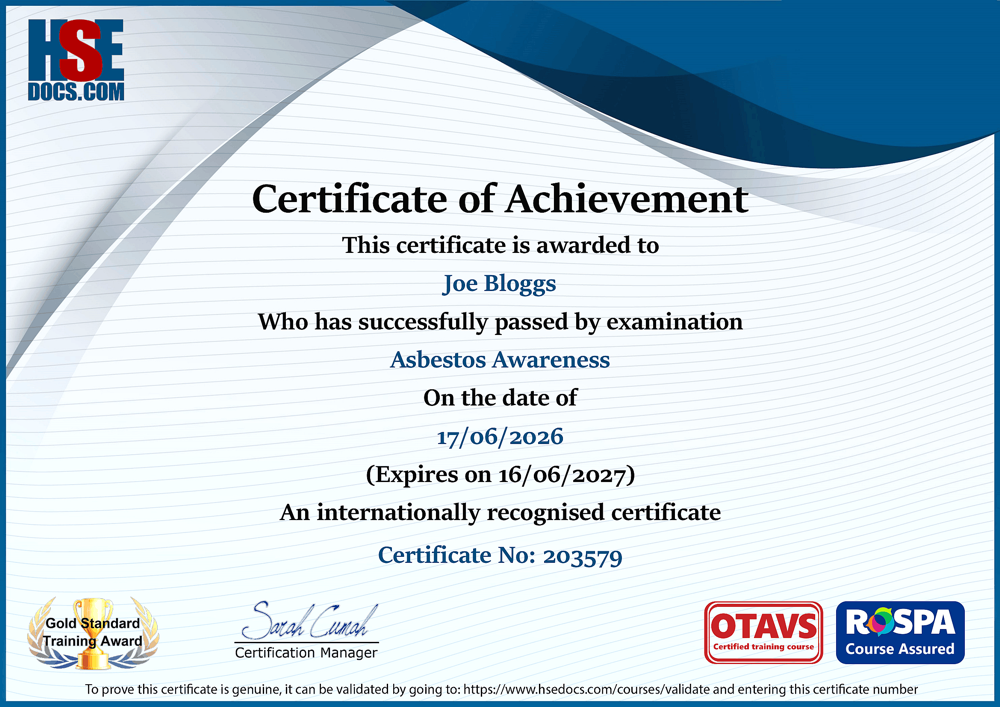
Download your sexual harassment awareness training certificate as soon as you’ve completed the online training.
This course has been assured and assessed for quality, content and delivery by OTAVS
Save more when you buy in bulk
Course format: Three video training modules, with a multiple-choice section at the end of each module.
Entry requirements: Anyone can complete this Sexual Harassment Awareness Training Course, whether they have previous experience or not.
Module 1 – Understanding Sexual Harassment
Key learning points:
- Harassment can be verbal, non-verbal, physical or online.
- Examples include sexual jokes, inappropriate comments, unwanted touching, sexual advances and offensive messages.
- Behaviour does not have to be intentional to constitute harassment.
- Silence, nervous laughter or failure to complain does not necessarily indicate consent.
- A single serious incident or repeated inappropriate behaviour may constitute harassment.
- The person's perception, surrounding circumstances and reasonableness of the behaviour's effect must be considered.
Module 2 – Assessing Sexual Harassment and Legal Responsibilities
Sexual harassment complaints must be assessed fairly, considering three factors: the affected person's perception, the circumstances of the incident and whether it was reasonable for the conduct to have that effect.
Employers should:
- Establish clear policies and acceptable standards of conduct.
- Provide appropriate employee training.
- Identify and assess harassment risks, including those involving third parties.
- Provide accessible and confidential reporting procedures.
- Investigate complaints promptly and fairly.
- Take appropriate disciplinary and preventative action.
Module 3 – Recognising, Reporting and Preventing Sexual Harassment
Anyone experiencing harassment should be encouraged to:
- Ask the person to stop, if safe and appropriate.
- Record relevant details and preserve available evidence.
- Report concerns through management, HR or designated reporting channels.
- Seek appropriate support and advice.
Employees witnessing harassment can help through four approaches:
- Direct intervention: Safely challenge inappropriate behaviour.
- Delegation: Ask a manager or appropriate person to intervene.
- Distraction: Interrupt or redirect the situation.
- Delayed response: Offer support afterwards and assist with reporting.
Organisations should ensure everyone understands their rights, responsibilities and available reporting procedures.
A sample of some customers we're proud to train
Teams across the UK use HSEDocs for practical workplace training and recognised certificates.