
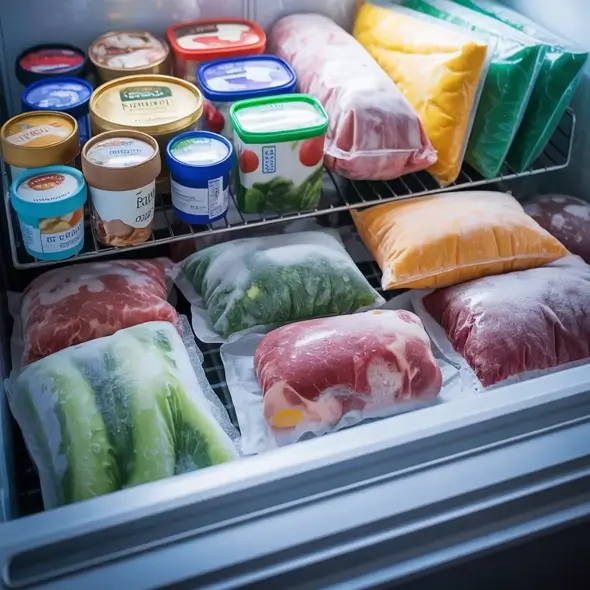


What Temperature Should Frozen Food be Stored at in Celsius?
When it comes to keeping frozen food safe, it's really important to make sure your freezer is set at -18°C (0°F) or colder. This temperature helps stop bacteria from growing and keeps your food tasting good. At this level, germs become inactive, helping prevent your food from going bad and it reduces the risk of freezer burn.
It must be noted that freezing does not kill bacteria; instead, it acts as a "pause button" for bacterial activity. While low temperatures effectively halt the growth of many harmful bacteria, they do not eliminate them. Instead, freezing induces a state of hibernation or dormancy in these microorganisms.
Various types of bacteria, including well-known pathogens such as E. coli, Salmonella, and Listeria, can survive freezing temperatures, typically down to -18°C (0°F). This means that while freezing slows their growth, it does not kill them.
Once frozen food is defrosted, the bacteria that were dormant can become active again. When conditions are favourable, such as during storage at room temperature, these bacteria can multiply rapidly.
The only guaranteed method to effectively eradicate bacteria in food is to apply high heat. Cooking or heating food to reach an internal temperature of at least 74°C (165°F) ensures that harmful microorganisms are destroyed.
Here are some simple tips for storing frozen food effectively:
- Check the Temperature: Regularly check that your freezer stays at -18°C or lower. A cheap thermometer can help you see the actual temperature inside.
- Ideal Temperature: While -18°C is what's usually recommended for home freezers, commercial freezers can work a bit colder, around -18°C to -21°C. Keeping your food at these temperatures can help it stay fresh even longer.
- How to Store Food: Let cooked food cool down to room temperature before putting it in the freezer. This helps keep the freezer temperature stable and stops ice crystals from forming on your food. Also, divide larger amounts of food into smaller portions. This makes freezing quicker and provides easier serving sizes when you’re ready to eat.
- Organise Your Freezer: A well-organised freezer runs more efficiently. Try to keep it full but not too packed—this helps cold air circulate around the food. A full freezer is better at maintaining its temperature during power outages, reducing the risk of your food thawing.