


What Are My Responsibilities As An Employer Under The Manual Handling Operations Regulations 1992?
Under the Manual Handling Operations Regulations 1992 (as amended), employers are legally obliged to adhere to a specific hierarchy to effectively manage the risks associated with manual handling activities. This hierarchy includes the following steps:
- Avoid: Whenever feasible, employers should take proactive measures to eliminate the necessity for employees to engage in manual handling tasks that pose a risk of injury. This may involve reconsidering work processes or designing tasks that do not require manual handling.
- Assess: For unavoidable tasks, employers must conduct a thorough, meticulous risk assessment. This assessment should be "suitable and sufficient," taking into account the factors outlined in the TILE model—Task, Individual, Load, and Environment. Each of these factors plays a crucial role in understanding how the handling task can be safely performed.
- Reduce: After assessing the risks, employers must implement appropriate control measures aimed at reducing the likelihood of injury to the lowest level that is reasonably practicable. This could include providing mechanical aids, such as trolleys, hoists, or lifting equipment, as well as reconfiguring the workplace layout to minimise the risks associated with manual handling.
- Provide Information: It is essential for employers to keep employees well-informed about the tasks they are performing. This includes providing detailed information about the load's nature, such as its weight, size, shape, and centre of gravity, which all play a role in determining safe handling practices.
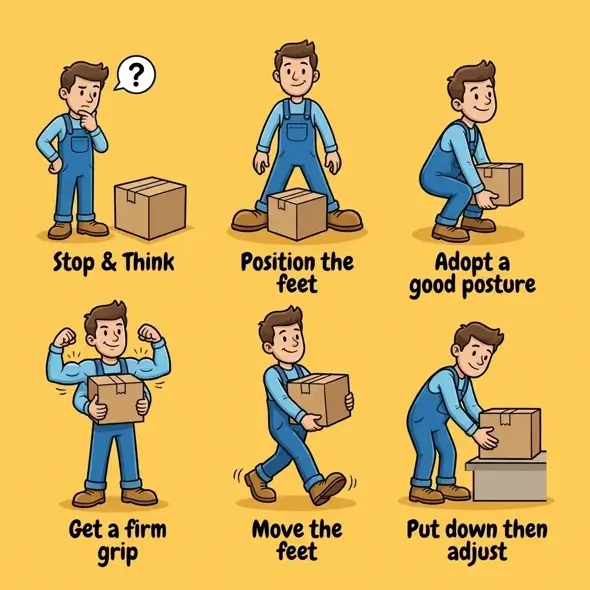
- Training: To ensure safe handling procedures are effectively executed, employers must provide adequate training to employees. This training should encompass proper manual handling techniques, the safe use of equipment, and awareness of the risks involved in manual handling tasks.
- Review: Employers are obligated to regularly review risk assessments and control measures, especially when tasks or working conditions change. This ongoing review process is critical to ensure that the established control measures remain effective and continue to protect employees from injury.
- Usage Examples: The regulations cover a wide range of activities associated with manual handling, including but not limited to:
- Lifting, lowering, pushing, pulling, carrying, or moving loads of various kinds.
- Handling, storing, and organising items in warehouses or similar environments.
- Safely moving and assisting patients within healthcare settings.
- Operating machinery or engaging in manual assembly tasks.
Employers must take all necessary precautions to mitigate risks to the greatest extent possible. It is particularly important to maintain active manual handling policies in workplaces with 5 or more employees, as this requires that risk assessments be documented and readily available for review.