
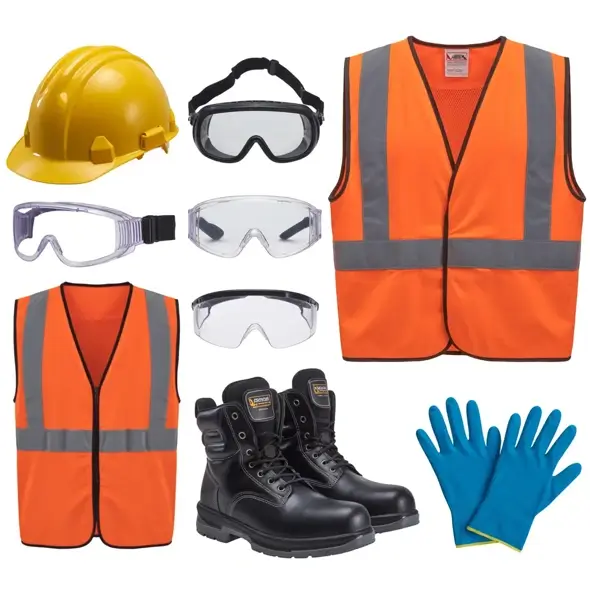


PPE Equipment
PPE (Personal Protective Equipment) is the final defence against risk. If a task were completely risk-free, protection wouldn’t be necessary.
So the last line of defence is admitting that we may get a bump on the head, or similar and protecting against it with wearable equipment because we can’t completely eliminate the risk.
If you need to cross a river but can't swim, you build a boat and wear a life jacket. Likewise, if you need to work at height and there is any risk of falling, you use the safest and most suitable access equipment for the task and incorporate fall arrest systems or similar measures to keep you safe should an accident occur.
Of course, no PPE is perfect. The boat could hit a rock and start letting in water. A fall arrest system could fail due to human error in not properly fitting or using it.
It is important to understand that personal protective equipment (PPE) should not serve as the sole means of ensuring safety in hazardous environments. Instead, it should be viewed as a last line of defence, utilised after all other possible measures to mitigate risks have been exhausted. Comprehensive safety protocols should prioritise eliminating or minimising hazards through engineering controls, administrative actions, and effective training. PPE is valuable when risks cannot be completely eradicated, but relying on it alone can create a false sense of security. Therefore, proper assessment of the work environment and thorough implementation of safety measures should always come first.
What Does PPE Protect You From?
Personal Protective Equipment (PPE) is vital for protecting workers from and reducing their exposure to serious injuries and illnesses resulting from various hazards, including chemical, radiological, electrical, physical, or biological threats. PPE acts as a critical final line of defence against potential dangers, such as falling objects, flying particles, toxic fumes, extreme temperatures, and infectious agents.
Key Areas of Protection
- Respiratory Protection: Essential in environments where airborne contaminants threaten lung health. Masks and respirators are designed to filter harmful dust, mists, gases, or fumes, ensuring the air inhaled is safe. Various respirator types (e.g., N95, full-face respirators) may be used depending on the risk level to provide adequate protection against specific contaminants.
- Eye and Face Protection: The eyes and face are especially vulnerable to injuries from workplace hazards. Protective equipment such as safety glasses, goggles, and face shields is crucial. These protect against risks such as flying debris, chemical splashes from corrosive liquids, and exposure to potentially harmful radiation. Selecting the appropriate eye protection depends on the specific hazards present.
- Head Protection: To reduce the risk of head injury from impacts caused by falling or flying objects, safety helmets and hard hats are used. These headgear devices absorb and distribute impact forces and may include features like visors or built-in ear protection, depending on the work environment.
- Hand and Skin Protection: Hands and skin are often in direct contact with hazardous materials or sharp objects. Gloves made from various materials (latex, nitrile, leather) are selected based on the hazard type, providing protection against cuts, punctures, abrasions, chemical burns, and thermal injuries. Specialised clothing can also cover exposed skin from harmful substances or extreme temperatures.
- Foot Protection: Safety boots are vital in workplaces where there’s a risk of falling objects, slippery surfaces, or sharp items. These boots typically feature reinforced toes, slip-resistant soles, and protective elements to reduce the risk of punctures or injuries while providing comfort for extended wear.
- Hearing Protection: In environments with high noise levels, hearing protection is required, as prolonged exposure can cause hearing loss. Devices like earplugs and earmuffs are essential for reducing auditory risk. They are available in different designs to suit various work situations and noise levels, ensuring optimal hearing safety.
- Body Protection: For tasks with a high fall risk, harnesses are vital for worker safety. Paired with high-visibility clothing, they improve worker visibility in hazardous environments. High-visibility gear is especially important near vehicle traffic or machinery, as it helps prevent accidents.
- Fall arrest protection: This refers to PPE designed to safely stop a worker who is already falling from a height and reduce the risk of injury. This system typically consists of a full-body harness, a connecting device such as a lanyard or lifeline, and an anchor point. It serves as a last line of defence when preventing falls is not possible.
Each of these protective equipment categories is crucial to maintaining workplace safety and health. Choosing appropriate PPE based on specific risks is highly important, and regular training on its correct use and maintenance is essential to ensure maximum protection for all workers. workers.