
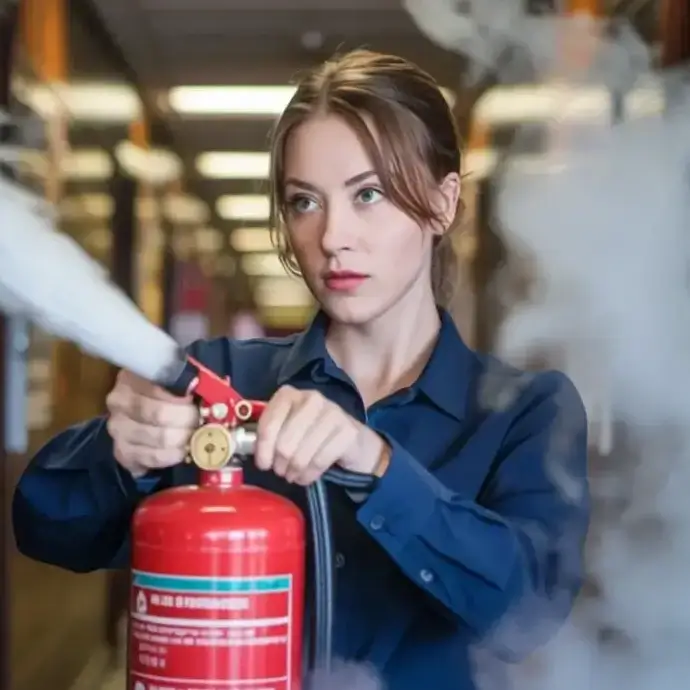


Introduction to Fire Extinguishers
Fire extinguishers can be essential for effectively tackling small fires, nipping them in the bud and preventing them from spreading uncontrollably. Their design and function differ depending on the type of fire they are meant to extinguish, which makes it important to understand their classifications and uses. Each type of fire extinguisher is marked according to the specific fire hazards it is intended for, such as those involving ordinary combustibles, flammable liquids, electrical equipment, or even specialised materials like combustible metals.
Choosing the correct type of fire extinguisher and ensuring that extinguishers are easily accessible and ready for use during an emergency are both key factors in extinguishing a fire at its source, to prevent it from growing and spreading.
Knowing how to operate an extinguisher quickly and correctly is also vital for effective response when every second counts.
While specific types of fire extinguishers are invaluable in certain situations, they are not designed to fight every kind of fire. Our basic school education should have taught us not to use water to extinguish a cooking oil fire, nor to mix water and electricity.
Additionally, if a fire is spreading rapidly or is beyond control, evacuation and contacting emergency services should become the priority.
Types of fire extinguishers in the UK are distinguished by the fire class they are intended to combat, their colour coding, and their contents. Extinguishers contain different extinguishing agents—water, foam, dry powder, CO2, or wet chemical—to cool, smother, or chemically alter the burning materials in various types of fires, including those involving ordinary combustibles. Before a person can select the correct type of fire extinguisher, they need to know what class of fire they are dealing with, and fires are classified into types based on their fuel source.
The UK classifications are:
- Class A: Ordinary combustibles like wood, paper, and fabric.
- Class B: Flammable liquids such as paint, petrol, or turpentine.
- Class C: Flammable gases, including methane or butane.
- Class D: Combustible metals like magnesium or potassium.
- Electrical Fires: Fires involving live electrical equipment, like plug sockets.
- Class F: Cooking oils and fats, often seen in chip-pan fires.`
Extinguisher Types & Contents
Each type of fire extinguisher uses a different agent and is suited to specific fire classes:
- Water: Best for Class A fires, cooling the burning material.
- Foam: Works on Class A and some Class B fires by creating a barrier to smother the flames.
- Dry Powder: Standard "ABC" powder is effective on Classes A, B, and C fires, with specialist powders available for Class D fires.
- CO2 (Carbon Dioxide): Suitable for Class B and electrical fires by displacing oxygen.
- Wet Chemical: Specifically designed for Class F fires, and may also be suitable for Class A fires.
Colour Coding
In the UK, extinguishers are predominantly red, with a coloured band or label indicating the type of content:
- Red: Water
- Cream: Foam
- Blue: Dry Powder
- Black: CO2
- Yellow: Wet Chemical
Class of Fire and Suitable Type of Fire Extinguisher
Class A Fire
In the UK, a Class A fire extinguisher is designed to combat fires involving common combustible solids, such as wood, paper, cloth, and some plastics. The effectiveness of a Class A extinguisher is indicated by a number (for example, 2A, 4A, 13A), which shows its extinguishing capability. The number reflects the size of fire it can put out, with a higher number indicating a more powerful extinguisher.
In practice, Class A extinguishers are especially effective for dealing with small fires involving items like furniture, cardboard, or rubbish. When using a Class A extinguisher, it is crucial to direct the spray at the burning material rather than the flames. This method ensures that the fire's source is targeted, improving the chances of extinguishing it successfully.
These extinguishers are available in various sizes, enabling fire safety officers to select a model that meets the specific needs of a given environment. Class A extinguishers provide a reliable solution for controlling small fires involving common combustibles.
Class B Fire
A Class B fire involves flammable liquids such as petrol, oils, alcohol, and other chemicals, which produce high temperatures and spread quickly. It requires a specific extinguisher, like a foam or dry powder extinguisher, that works by creating a barrier to smother the flames and cut off oxygen.
It is dangerous to use water-based extinguishers on Class B fires because water is denser than oil and can have two disastrous effects:
1/ The density and water pressure can easily spread any flammable liquids, which effectively increases the size of the fire and allows it to spread rapidly.
2/ If a class B fire is in a pan or container, the water will sink to the bottom and instantly boil into steam. This rapid expansion causes an explosion that splatters the superheated, burning liquids everywhere, resulting in a large fire that spreads quickly.
There are several types of fire extinguishers for a Class B fire, including foam, carbon dioxide (CO2), or dry chemical powders, which work by forming a barrier that cuts off the oxygen supply from the fuel, effectively halting the fire.
When using a Class B extinguisher, it is essential to direct the spray at the base of the flames rather than the top. This approach targets the fuel source, which is critical for controlling and extinguishing the fire. Sweeping the nozzle or hose side to side ensures even coverage over the affected area, reducing the likelihood of the fire reigniting.
Flammable liquid fires can release toxic fumes, so it is crucial to prioritise ventilation in the affected area if it is safe to do so.
Class C Fire
A Class C fire involves flammable gases like propane or butane. Although there isn't a specific extinguisher called a "Class C extinguisher," standard Dry Powder extinguishers are effective because they smother the gas fuel. However, they are not recommended for enclosed spaces due to the difficulty of cleaning the residue and the risk of inhaling the powder.
Class D Fire
A Class D fire is caused by combustible metals such as magnesium, titanium, aluminium, and sodium. These metals can ignite under certain conditions and burn at very high temperatures, creating unique challenges that standard extinguishers cannot handle. The dry powder agents in Class D extinguishers are specifically formulated to cut off the fuel's oxygen supply, effectively smothering the fire. These agents also prevent heat transfer, helping to reduce the risk of the fire spreading or reigniting.
Due to the reactive nature of these metals, using water or incorrect extinguishing agents can cause violent chemical reactions, potentially worsening the fire or making it uncontrollable. This highlights the importance of having Class D extinguishers available in environments where combustible metals are stored, processed, or machined. When using a Class D extinguisher, the powder should be applied in a thick layer directly over the burning material, ensuring complete coverage to efficiently suppress the fire. Operators must remain cautious and maintain a safe distance, as metal fires can produce intense heat and sparks. Proper training in the use of these extinguishers is essential, especially in industrial facilities, workshops, and laboratories where these materials are handled regularly. Following safety protocols carefully ensures the equipment is used effectively during such emergencies.
Class Electrical Fire
An electrical fire was previously called a Class E fire. To extinguish a Class E (electrical) fire, use a CO2, dry powder extinguisher, or a fire blanket. Do not use water because it conducts electricity and can cause electrocution. If it is safe and possible, switch off the power supply to the affected equipment before attempting to fight the fire. The power supply may be switched off by unplugging it from the wall, or by going to the fuse box or circuit breaker and shutting off the power to the affected area or the entire building. Cutting the power eliminates the risk of electric shock.
Class F Fire
Class F fires commonly occur in kitchen settings, involving cooking oils, fats, and grease. These fires require a special approach because traditional methods, such as water, can spread or worsen the flames.
For a Class F fire, you must use a wet chemical fire extinguisher. These extinguishers contain potassium salts that cool the flames and create a saponification layer of foam to smother the fire, preventing re-ignition.
The Wet Chemical Extinguisher works by releasing a fine mist of a potassium-based solution that cools the intense heat of the burning oil. The potassium salts react with the hot oil, forming a thick, soapy foam on the surface that creates a barrier, cutting off the oxygen supply to the fire and preventing it from reigniting.
Choosing the Right Type of Fire Extinguisher
Selecting the right fire extinguisher involves assessing the specific fire risks present in your environment. Different locations, such as homes, offices, kitchens, or industrial sites, have unique hazards, so it’s important to choose an extinguisher suitable for the potential fire sources. Start by identifying the materials and equipment in the area, as well as any flammable substances that might be there. Each type of extinguisher is designed for a particular class of fire, and using an incorrect one can be ineffective or dangerous.
Proper placement is just as crucial—extinguishers should be installed in clearly visible and easily accessible spots to enable quick action during an emergency. Ensure everyone in the space knows where the extinguishers are and how to operate them safely. Routine training helps build confidence in their use.
To ensure reliability, fire extinguishers need regular inspection. Check the pressure gauge to confirm it’s within the recommended range and look for signs of damage, such as corrosion or leaks. Replace extinguishers that are expired or damaged. By following these steps, you can make sure your extinguishers are ready for effective use, reducing risks and safeguarding your space from potential fire damage.