
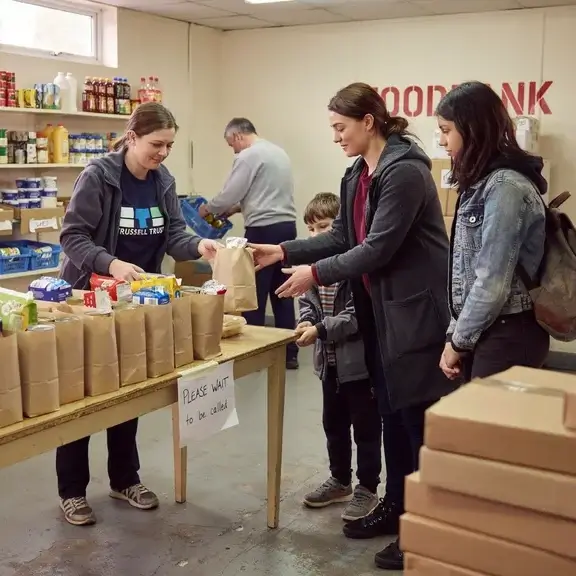


Discounted training rates for food banks and charities
Offering a Helping Hand
Staff training
Staff training for food handlers is a legal requirement, and at HSEDocs, we give charities, food banks, and community projects two free food safety training courses. We also offer substantial discounts on further training costs regardless of what’s needed.
We believe charities should be given a helping hand and access to affordable training. Therefore, in addition to offering two free courses, we have set our prices for charities at the discounted rate of £4.99 per course.
It is truly disheartening that food banks have become an essential resource for many individuals and families across the UK. These not-for-profit organisations play a crucial role in providing emergency food supplies to those in need, yet they face the ongoing challenge of funding their operational costs. This includes essential expenses such as hiring and training staff, maintaining facilities, and managing logistics. In light of these challenges, HSEDocs is eager to step in and offer support, helping food banks optimise their operations and ensure they can continue to serve their communities effectively.
Please get in touch if you run or work for a foodbank and would like to take advantage of lower training costs.
The contributions made by volunteers are invaluable to the successful operation of food banks. These unsung heroes are involved in a wide range of tasks, from classifying and packing donated food items to providing support during community food drives. They also play a crucial role in the background, assisting with essential administrative tasks that help keep the food bank running smoothly. In addition to hands-on tasks, volunteers play a crucial role in raising public awareness of food banks, their mission to combat hunger, and the urgent need for ongoing community support. The sheer breadth of their roles makes it clear that without their tireless dedication and commitment, the effective functioning of food banks would be a far more challenging endeavour.
The army of volunteers working at food banks deserves more than just thanks for their efforts; they also require proper training. Those who handle pre-packaged foods, tins, and raw fruits and vegetables should be trained in Food Safety Level 1. On the other hand, those who handle any open foods or prepare food in any way should receive training in Food Safety Level 2. HSEDocs offers both courses at reduced rates to food banks and other charitable organisations.
Foodbank Funding
Food banks rely heavily on the generosity of the public, corporations, and sometimes government organisations to remain financially sustainable. Donations of money and food from the general populace are the backbone of food bank operations, enabling them to stay afloat. Additionally, local businesses and large corporations often contribute through direct donations or sponsoring food and fund drives.
These drives are organised events designed to encourage communities and corporations to donate large quantities of food and funds. In many cases, food banks collaborate with other organisations to maximise the impact of these drives.
Despite the aforementioned sources of support, food banks still face significant operational and financial challenges. Therefore, continued assistance from individuals, businesses, and the wider community is essential to their continued functionality and to the vital work they do in addressing food insecurity.
Find A Foodbank
Food banks serve a diverse range of people and families facing financial difficulties. These recipients come from diverse backgrounds, including low-income families, unemployed individuals, elderly people living on limited pensions, and those experiencing temporary financial hardship due to medical emergencies or unexpected life events. Food banks offer hope to those struggling with food insecurity, a situation in which they lack sufficient food to maintain a healthy, active lifestyle. Therefore, the patrons of food banks are not defined by any single characteristic or circumstance; rather, they are bound together by the common experience of financial hardship that hinders their access to nutritious food.
Some food banks are affiliated with larger organisations in the UK, such as The Trussell Trust or FareShare. These memberships can provide support and access to a broader range of resources, which are often essential in boosting the food bank's capacity to serve more people in need.
To find a food bank linked to the Trussell Trust, you can visit their site and enter your location or postcode to search.
The Salvation Army offer independent and linked food banks from various locations that can be searched using their link.
Scope promotes a variety of services, including:
Citizens Advice offers advice on using food banks and getting referrals for:
IFAN, The Independent Food Aid Network, has a search feature for independent food banks, which you can access HERE
The Impact of Food Banks
Food banks have a significant impact on society, serving as an emergency resource for people struggling to afford food and helping mitigate hunger in local communities. However, their benefits go beyond simply providing meals. Food banks aim to address the root causes of food insecurity, such as poverty and unemployment, by offering assistance and relevant resources. They strive to provide not just immediate relief but also long-term solutions through education, referral services, and partnerships with other organisations. The goal is to empower individuals and address systemic issues, ultimately creating a society where everyone has access to adequate, nutritious food. The widespread influence of food banks underscores the ongoing need for public and corporate support and contributions, emphasising the crucial role they play in building healthier, hunger-free communities.