
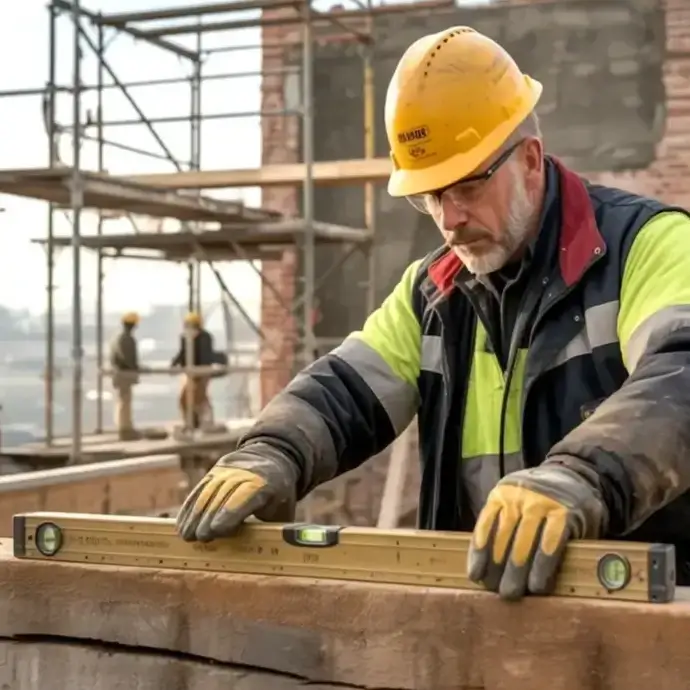


What's in a risk assessment for carpenters?
A risk assessment for carpenters identifies workplace hazards, evaluates the potential severity of harm, and establishes suitable control measures to protect workers from accidents and long-term health issues. The specific risks and controls may vary depending on the work environment, ranging from workshop settings to active construction sites. Ultimately, a risk assessment aims to reduce or eliminate hazards by recommending effective risk management strategies called control measures.
A completed risk assessment document usually contains the following details:
- Assessment Details: Include the name of the person who carried out the assessment and the date it was completed.
- Description of Activity: Provide a detailed account of the activity, work area, or process being evaluated.
- Identified Hazards: Compile a list of anything that could potentially cause harm. Hazards may encompass chemicals, malfunctioning equipment, manual handling, noise, stress, or working at heights.
- Who Might Be Harmed: Identify the individuals at risk and how they could be affected (for example, employees, contractors, visitors, or specific groups such as new and expectant mothers).
- Risk Evaluation: Assess the level of risk, usually categorised by the likelihood and severity of harm (e.g., low, medium, or high). Some assessments use a matrix to illustrate this.
- Existing Control Measures: Outline the precautions and controls currently in place to minimise the risks.
- Further Action Required: List any additional measures needed to lower the risks to an acceptable level further.
- Action Plan: Specify who is responsible for implementing the additional controls and set a deadline for their completion.
- Review Date: Establish a date for reviewing the assessment to ensure it stays relevant and effective.
To create a Risk Assessment, a five-step process is recommended by the UK's Health and Safety Executive (HSE), which is as follows:
- Identify Hazards: Conduct a thorough inspection of the workplace to identify potential sources of harm. It is advisable to consult employees and review accident and ill-health records during this stage.
- Determine Who May Be Harmed and How: Establish which groups or individuals may be at risk and specify how injuries or illnesses might occur.
- Evaluate Risks and Implement Precautions: Assess both the likelihood and potential severity of each hazard. Consider whether existing control measures are adequate or if further action is required, aiming to do everything "reasonably practicable" to safeguard health and safety.
- Record Findings: For organisations with five or more employees, document all significant findings, including identified hazards and corresponding control measures.
- Review and Update the Assessment as Necessary: Treat the risk assessment as a living document, reviewing it regularly and updating it when significant changes occur in the workplace, such as the introduction of new equipment, substances, or procedures.
But why do we need carpentry Risk Assessments?
We need Risk Assessments to effectively reduce the risk of an accident by analysing potential causes and implementing measures to prevent them. We need them in place to help reduce the number of workplace accidents.
In the UK during 2023/24, 124 workers died in work-related accidents, and 604,000 sustained a self-reported non-fatal injury. Additionally, 61,663 non-fatal injuries were reported by employers under the Reporting of Injuries, Diseases and Dangerous Occurrences Regulations. These shocking statistics are based on the UK's working population of approximately 34 million, according to the Office for National Statistics (ONS).
We must remember that current work accident rates are occurring despite employers having Risk Assessments, COSHH Assessments, Method Statements, PPE, and modern access equipment in place. However, the fact remains that if all risks were properly evaluated and adequate control measures put in place, no one would suffer an accident at work.
Since all accidents can potentially be avoided, if an accident does occur at work, the question then arises of how, why, and whose fault it was. Does the employer assess the risk and have control measures in place? Did the employee ignore the control measures or carry out work without regard for their own well-being? Was it a new and unforeseen risk that was outside of the existing control measures?
If an accident happens, there is always someone at fault.
HSEDocs have put together a carpenter's H&S pack based on our customer request, which you can view HERE.