
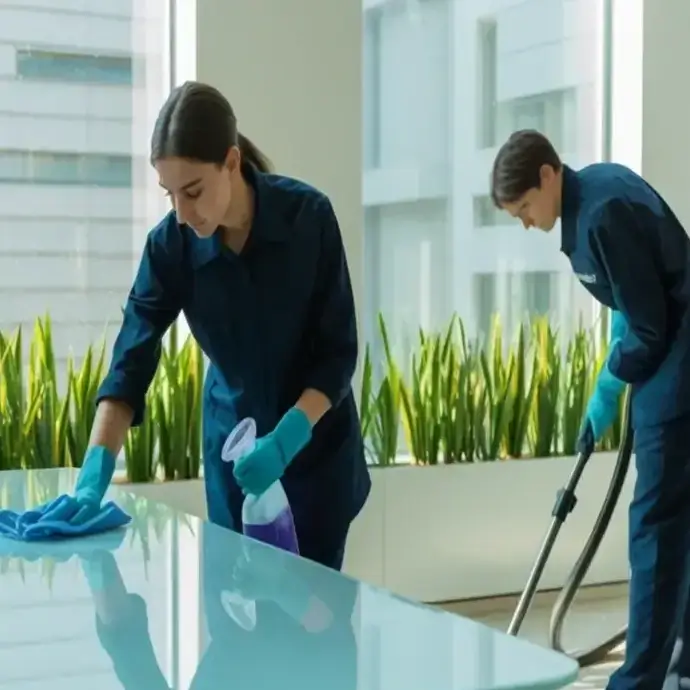


Health and Safety for Cleaners
Many companies often approach us seeking guidance on what to include in a risk assessment or how to write one. In response to customer needs, we have developed some tailored offer packages specifically for various industries. Each package includes Risk Assessments, COSHH Assessments, and Method Statements. If you are interested in a cleaning-specific package, you can find out more HERE.
A risk assessment for a cleaning company is a document created through a process that involves identifying potential hazards associated with different cleaning tasks. This includes considerations of the environment where cleaning takes place, such as the types of surfaces being cleaned, the equipment used, and the techniques employed by staff.
In the UK, conducting a risk assessment is not just a best practice but a legal requirement under health and safety regulations. This systematic approach promotes safe working practices by clearly detailing procedures for addressing identified hazards, conducting staff training, and providing necessary personal protective equipment (PPE).
A risk assessment for cleaning chemicals, such as detergents and bleach, should be more specific than just the risks of using the product. It also needs to include safe storage and handling, any PPE specifically required when using the product, health risks it may pose, first aid measures after exposure, disposal methods, behaviour in a fire, including gases or chemicals released, and the appropriate fire extinguishing medium. This type of risk assessment is called a COSHH Assessment, which stands for Control of Substances Hazardous to Health.
The COSHH regulations were first introduced in the UK in 1988, but they came into force on 1 October 1989. These regulations were expanded to include biological agents in 1994, with the current primary legislation being the COSHH Regulations 2002. It is these regulations that require employers to create COSHH Assessments of any substances that their employees or anyone else affected by their work may encounter.
COSHH Assessments cover many everyday substances, such as detergents, as well as things such as fumes and air pollution. They are relevant to almost every workplace because most businesses handle hazardous substances in some form or another.
So, we have:
Risk Assessments: These identify and control the risks you encounter when working.
COSHH Assessments: These identify and control the risks you encounter from substances that you may encounter at work.
Other essential health and safety documents that cleaners need include:
Method Statements: These documents detail the specific, step-by-step procedures, safety measures, and control measures for performing cleaning tasks, ensuring that work is carried out safely. They are about using safe working practices whilst performing tasks.
Company Health and Safety Policy: This is a document that outlines an organisation's commitment to managing health and safety risks, details responsibilities, and explains how risks are controlled through procedures and training. It is a legal requirement for companies with five or more employees, and should include a statement of intent, roles and responsibilities, and specific arrangements for risk management, training, and emergency procedures.
Table of contents for Company Health and Safety Policy typically includes:
1.0 Organisations' responsible persons
2.0 Policy Statements
- 2.01 Health and safety policy statement
- 2.02 Risk assessment policy statement
- 2.03 Environmental policy statement
- 2.04 Equal opportunities policy statement
- 2,05 Modern slavery and human trafficking policy statement
3.0 Organisation
- 3.01 Safety management structure
- 3.02 Employers responsibilities
- 3.03 Employees responsibilities
- 3.04 Information for employees
- 3.05 Designated Duties and Responsibilities
4.0 Safe working practices
- 4.01 Accident reporting procedure
- 4.02 Alcohol and drugs
- 4.03 CDM (Construction Design and Management Regulations 2015)
- 4.04 Confined Spaces
- 4.05 COSHH (Control of substances hazardous to health)
- 4.06 Damaging knee (from kneeling)
- 4.07 Desk work. Musculoskeletal injuries and posture fatigue
- 4.08 Desk work. RSI (Repetitive strain injuries)
- 4.09 Disciplinary rules
- 4.10 DSE (Display screen equipment)
- 4.11 Electrical installations
- 4.12 Electricity
- 4.13 Falls from heights (hop-ups)
- 4.14 Falls from heights (Kick step)
- 4.15 Falls from heights (Step ladder)
- 4.16 Fire/explosion
- 4.17 First aid procedures
- 4.18 Hand-arm vibration
- 4.19 Manual handling
- 4.20 Noise
- 4.21 Objects falls from height
- 4.22 Office equipment
- 4.23 Permits to work
- 4.24 PPE (Personal protective equipment)
- 4.25 RSI (Repetitive strain injuries)
- 4.26 Safety signs
- 4.27 Slip, trips and falls
- 4.28 Struck by objects
- 4.29 Training
- 4.30 Vehicles
- 4.31 Waste management
- 4.32 Welfare facilities
- 4.33 Work equipment
- 4.34 Working at height
- 4.35 Young persons