
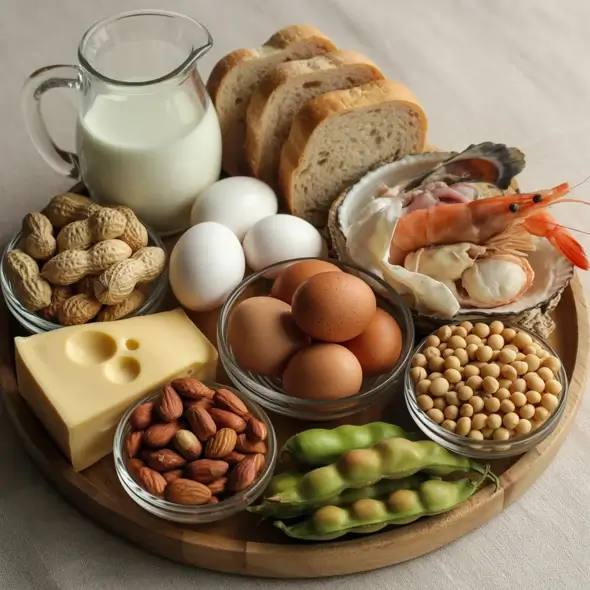


What Are The 14 Legally Notifiable Allergens in The UK?
In the United Kingdom and the European Union, food businesses are legally obligated to declare 14 specific allergens if they are present as ingredients in any food or drink products. This requirement is essential for consumer safety, as these allergens can trigger severe allergic reactions in sensitive individuals. The allergen information must be clearly highlighted in the ingredients list, commonly using styles like bold or italics to ensure visibility.
The 14 Major Allergens
- Celery: This includes all parts of the celery plant, such as stalks, leaves, seeds, and celeriac. It's commonly found in salads, soups, and certain snacks.
- Cereals Containing Gluten: This allergen group covers various grains such as wheat (including varieties like spelt and Khorasan), rye, barley, and oats. It is commonly present in bread, pasta, pastries, and many processed foods.
- Crustaceans: This category includes seafood like prawns, crabs, lobsters, and crayfish. These are often featured in seafood dishes and some sauces.
- Eggs: The regulation applies to eggs from all types of birds, notably hens, ducks, and quails. Eggs are prevalent in a wide range of products, from baked goods to dressings and sauces.
- Fish: All species of fish are included in this allergen, including their derivatives such as fish oils and caviar. Fish may be found in dishes, sauces, and spreads.
- Lupin: This allergen encompasses lupin seeds and flour, which are frequently used in pastries, pasta, and gluten-free products, making it important to label appropriately.
- Milk: All types of mammalian milk—such as cow, sheep, and goat—are included, as well as dairy products like butter, cheese, and yoghurt. Milk is a common ingredient in various cuisines.
- Molluscs: This includes a variety of shellfish such as mussels, oysters, squid, land snails, and whelks. Molluscs are often served as entrees or appetisers in many seafood dishes.
- Mustard: The allergen covers all forms of mustard, including liquid mustard, mustard powder, and mustard seeds. This ingredient is commonly utilised in sauces, dressings, and marinades.
- Tree Nuts: This category includes a variety of nuts, such as almonds, hazelnuts, walnuts, cashews, pecans, Brazil nuts, pistachios, and macadamia nuts. These nuts can be found in snacks, desserts, and many baked goods.
- Peanuts: Peanuts, which are legumes that grow underground and are sometimes referred to as groundnuts, pose a significant allergy risk and are found in various products, including snacks, sauces, and confectionery.
- Sesame: This allergen includes sesame seeds, oils, and products such as tahini, and is commonly found in bread, dips, and Asian cuisine.
- Soybeans: Known as soya or soy, this allergen is often present in products like tofu, miso, edamame, and many processed foods, including sauces and dairy alternatives.
- Sulphur Dioxide and Sulphites: These must be declared when present at concentrations above 10mg/kg or 10mg/litre. They are commonly used as preservatives in dried fruits, wines, and some processed foods.
For more thorough information about each allergen, including the common foods they are found in and guidance on managing allergies, you can consult the official guidance from the Food Standards Agency or the NHS Scotland food allergy guide.