
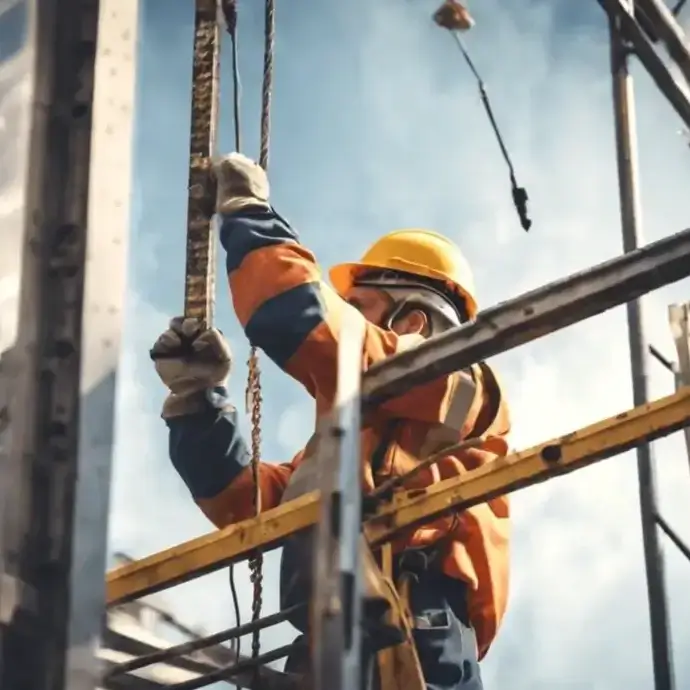


Understanding the need for a Work at Height Certificate
One of the most common workplace accidents is falling during work at height, highlighting the need to identify hazards associated with elevated work environments and prioritise safety above all else. Whether you're engaged in construction, operating within warehouses, or involved in any other industry that requires work at height, understanding the risks is vital for ensuring safety.
This guide will explore the essential aspects of safely working at height, offering detailed insights into various hazards, such as unguarded edges, fragile surfaces, and improper use of ladders and scaffolding. It will also provide comprehensive strategies for risk assessment and management, including the implementation of effective safety protocols, the use of appropriate personal protective equipment (PPE), and the importance of training to obtain a work at height certificate.
Working at height comes with several primary risks, including:
1. Falls from Edges: Falls can happen when there are unprotected edges, such as on rooftops, platforms, or near holes in the floor.
2. Falls through Fragile Surfaces: Falling through fragile roof panels or skylights is a specific risk, especially in industrial settings or during roof work.
3. Falls from Ladders and Stepladders: Incorrect ladder use, damaged equipment, or simply losing balance can lead to falls.
4. Falls from Scaffolding: Inadequately constructed or secured scaffolding can collapse or lead to falls, notably if safety measures like guardrails are missing.
5. Slips, Trips, and Falls: Slipping or tripping at height, for example, on wet or cluttered surfaces, can lead to a fall, even from a relatively low height.
6. Falling Objects: Objects dropped from a height can injure people below. This risk includes tools or materials that are improperly secured.
7. Unsafe Access and Egress: Poorly planned access to and from work areas at height, such as unstable ladders or a lack of secure entry points, increases risk.
8. Weather Conditions: Weather conditions, including wind, rain, and ice, can significantly increase the risks associated with working at height by making surfaces slippery and reducing visibility.
9. Inadequate Training and Supervision: Workers who are not adequately trained in working at height safety measures or where supervision is lacking are at increased risk.
10. Lack of or Inadequate Personal Protective Equipment (PPE): Not using, or using improper, PPE, such as harnesses, can result in severe injury if a fall occurs.
11. Equipment Failure: Using faulty or unsuitable equipment, such as damaged scaffolding or worn-out harnesses, can lead to falls.
Additionally, human error, often stemming from insufficient training or fatigue, can play a crucial role in incidents that occur during work at height. It is imperative that operatives remain aware of these inherent dangers to adopt proactive strategies that effectively prevent accidents. By fully understanding the risks, workers can better identify potential hazards and implement control measures.
Maintaining a safe working environment requires workers to recognise potential dangers in real-time and follow established procedures tailored to various situations. This includes understanding the use of personal protective equipment (PPE), being familiar with fall arrest systems, and adhering to guidelines for the safe use of ladders and scaffolding.
Ensuring that employees are aware of the dangers, accident rates and fatalities suffered when people fall from height can encourage safety and vigilance among workers. This can be helped by enrolling relevant staff on courses for a work at height certificate.
The Legal Framework Covered in a Course for a Work at Height Certificate
In the UK, working at height is regulated by a comprehensive legal framework to reduce risks and ensure worker safety. The primary legislation is the Work at Height Regulations 2005 (as amended), which applies to all work at height with a risk of falling and causing personal injury. The regulations impose duties on employers, the self-employed, and anyone who controls the work of others.
Here are some fundamental legal responsibilities and standards set under these regulations and other relevant UK laws:
1. Risk Assessment: Employers must conduct a risk assessment for work at height activities and ensure that competent persons plan, supervise, and perform all work. This includes choosing the right equipment for the task.
2. Avoidance of Work at Height: Where possible, work should be done from the ground or a solid structure. If reasonable, climbing or working at height should be avoided.
3. Use of Suitable Equipment: When work at height cannot be avoided, suitable equipment should be chosen. The choice of equipment should consider the risks identified in the risk assessment and the duration and frequency of use.
4. Training and Competence: Employers must ensure that everyone involved in work at height is competent or, if not trained, is supervised by a qualified person. This includes training on the equipment they will use, the risks they may face, and gaining a work at height certificate.
5. Inspection and Maintenance: All equipment used for work at height must be properly inspected and maintained before its first use, regularly after that, and following any circumstances that may jeopardise its safety.
6. Emergency and Rescue Plans: Employers must also plan for emergencies and rescue, ensuring that appropriate procedures are in place should something go wrong during work at height activities.
7. Other Relevant Legislation: In addition to the Work at Height Regulations, several other pieces of legislation may apply, depending on the work context. These include Health and Safety at Work, etc. Act 1974 provides the legal framework to promote high health and safety standards, and the Management of Health and Safety at Work Regulations 1999 require employers to manage health and safety under the principle of risk assessment.
In summary, the UK legal framework emphasises the importance of planning, competency, and the right equipment in managing the risks associated with work at height. Compliance is not only a legal requirement but is essential to ensure the safety and well-being of all those involved in or affected by work-at-height activities.
How a Work at Height Certificate Teaches Planning and Risk Evaluation.
A comprehensive work plan and a detailed risk assessment are essential prerequisites before undertaking any tasks at elevated heights. This preparatory phase involves an in-depth evaluation of all potential hazards associated with activities performed above ground level. It is essential to understand the intricacies of the specific work being performed, the surrounding environment, and the necessary equipment. By conducting a thorough evaluation, the most suitable methods and tools for the task can be identified, significantly lowering the risk of accidents.
The risk assessment should encompass a variety of factors, including environmental conditions such as wind speed, weather forecasts, and proximity to electrical lines, all of which can impact safety. Furthermore, it is crucial to assess the physical condition and competency of the workforce involved. This includes verifying that team members hold a work at height certificate and have had the necessary training for working at heights, as well as ensuring that they are in optimal health to perform their roles effectively and safely.
Establishing measures to address potential emergencies effectively involves creating clear emergency response protocols, providing accessible first-aid resources, and ensuring that communication systems are operational and understood by all personnel involved. The emphasis should be on developing a well-rounded and flexible safety planning approach that can adapt to changing circumstances and unexpected challenges.
By carefully considering all these variables and ensuring the workforce is thoroughly prepared, organisations can mitigate risks and enhance overall operational efficiency and productivity. Such an integrated approach not only safeguards personnel but also contributes to the successful execution of projects conducted at height.
The Work at Height Regulations 2005 mandate that work should be well planned, supervised, and carried out as safely as possible. Here is a step-by-step guide to planning and risk assessment for working at height in the UK, in line with the regulatory framework and best practices:
1. Avoid Working at Height Where Possible:
The first step is to avoid working at height if reasonably possible. This could involve modifying the design or method of work to eliminate the need to work at height.
2. Use Appropriate Work Equipment:
Select the most suitable equipment if working at height cannot be avoided. Prefer equipment that offers a higher level of fall protection (e.g., scaffolding over ladders when feasible).
3. Risk Assessment:
Conduct a detailed risk assessment specific to the work at height. This involves identifying all hazards associated with the work, who might be harmed and how, and the existing control measures. Then, evaluate the level of risk and decide whether additional control measures are required to reduce risk to an acceptable level.
Consider factors such as the height of the task, duration, frequency, condition of the surface being worked on, and the surrounding environment.
4. Plan the Work:
Meticulously plan the work at height. This includes deciding on the necessary safety measures, emergency procedures, and appropriate equipment selection.
The planning should cover how to minimise the time spent at height and how to access and egress the work area safely.
5. Training and Competence:
Ensure that all those involved in work at height are competent or, if being trained, supervised by a qualified person. Competence comes from training, knowledge, experience, and an attitude to safety.
Provide training specific to the tasks being undertaken and the equipment being used.
6. Supervision:
Adequate supervision should be in place for work-at-height activities. The level of supervision required will depend on the risk assessment and the workers' competence.
7. Use of Protective Equipment:
Personal Protective Equipment (PPE), including safety harnesses, should be used as a last resort, i.e., after all other safety measures have been considered and implemented.
Ensure that PPE is properly fitted and workers are trained in its use.
8. Inspection and Maintenance:
Regularly inspect and maintain equipment used for working at heights, including work and personal protective equipment.
Keep records of inspections as required.
9. Emergency Plan:
Develop and implement an emergency plan for rescuing anyone who has fallen from a height. This plan should be specific to the site and the type of work being done and should be understood by all involved.
10. Review and Revise:
Continually monitor and review the effectiveness of measures to control risks from working at height. Revisit the risk assessment and plan if significant changes occur or if there is reason to believe it is no longer valid.
By carefully following these steps, employers can ensure that work at height is carried out safely and complies with UK regulations, protecting workers from falls and other accidents.