
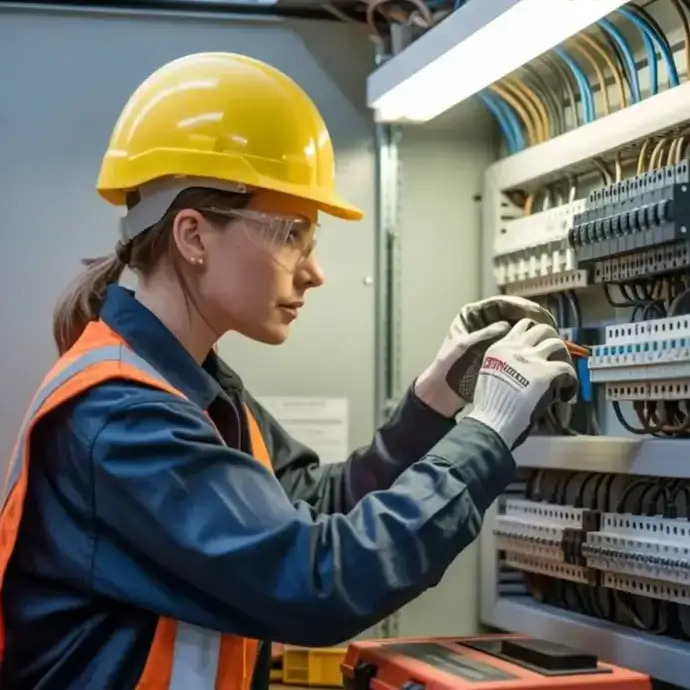


Electricians and Risk Assessments
Introduction to Safety Standards
Electricians work in high-risk environments that require strict compliance with health and safety regulations. They face dangers such as high-voltage exposure, confined spaces, and changing site conditions, making hazard awareness and proactive safety essential. Electricians must collaborate with other trades, follow national regulations, and apply industry standards to ensure safe practices for themselves and others on site.
Risk Assessment: An electrician's risk assessment is a structured document that identifies hazards related to electrical tasks and the work environment. It highlights who may be at risk—such as electricians, assistants, nearby workers, and bystanders—and the types of harm they might encounter. The assessment details preventative measures like PPE use, equipment checks, safety protocol adherence, and emergency plans, all aimed at maintaining a safe workplace.
What a Risk Assessment Involves:
Hazard Identification: Hazard identification is the process of finding and listing all potential sources of harm (hazards) in a workplace or activity, such as dangerous equipment, substances, or unsafe practices. It is the foundational step in a risk assessment, which also includes evaluating how likely someone could be harmed and how severe the harm might be (risk assessment), and then implementing controls to eliminate or reduce the risk. This initial step is crucial because it provides the basis for a comprehensive risk assessment. A risk assessment not only considers the likelihood of harm from the identified hazards but also the potential severity of the consequences. This dual approach helps prioritise hazards based on their risk levels.
Risk Evaluation: Once hazards have been identified, it is time to carry out an assessment of both the severity of the potential harm these hazards might cause and the likelihood of an incident occurring as a result. The possible consequences of an incident should be assessed, and the frequency of exposure to each hazard needs to be examined. This involves analysing how often individuals or systems may come into contact with the hazard, including factors such as duration and intensity of exposure, as well as the demographics of those affected. Reviewing historical data on similar incidents is vital. This includes collecting information on past accidents, near misses, and their outcomes, which can offer insights into patterns and trends that aid in predicting future risks.
Control Measures: Effective risk management involves applying a hierarchy of controls designed to reduce exposure to identified hazards. The hierarchy includes:
Elimination: Eliminating the hazard entirely from the workplace. For instance, if a piece of equipment poses a risk, it could be completely phased out.
Substitution: Replacing the hazardous element with a safer alternative. This could involve opting for non-toxic materials instead of ones that are harmful.
Engineering Controls: Introducing physical modifications to facilities or equipment, such as fitting safety guards, ventilation systems, or isolating hazardous machinery to minimise exposure to risks.
Administrative Controls: Implementing procedures that establish safer work practices. These controls involve creating and implementing policies, procedures, training, signage, and other practices to reduce the frequency, duration, or intensity of contact with hazards. Examples include safety training, job rotation, safe work procedures, and warning signs.
Personal Protective Equipment (PPE): When other controls are not feasible, providing suitable protective equipment, such as helmets, gloves, goggles, or respirators, to employees is the last resort. Although it is viewed as a final line of defence, the correct use of PPE can significantly reduce the risk of injury.
Documentation: Accurate and comprehensive documentation of all hazards identified, risk assessments, and control measures is essential. This ensures that safety protocols are consistently adhered to and creates a record for future reference. Documentation may include safety audits, incident reports, training logs, and maintenance records, all promoting a safety-conscious culture and ongoing improvement within the organisation.
Conclusion: A risk assessment for an electrician is a systematic process of identifying hazards, evaluating the potential for harm, and implementing control measures to mitigate risks. This process is required by law in the UK to ensure safety for the electrician, other workers, and the public.