
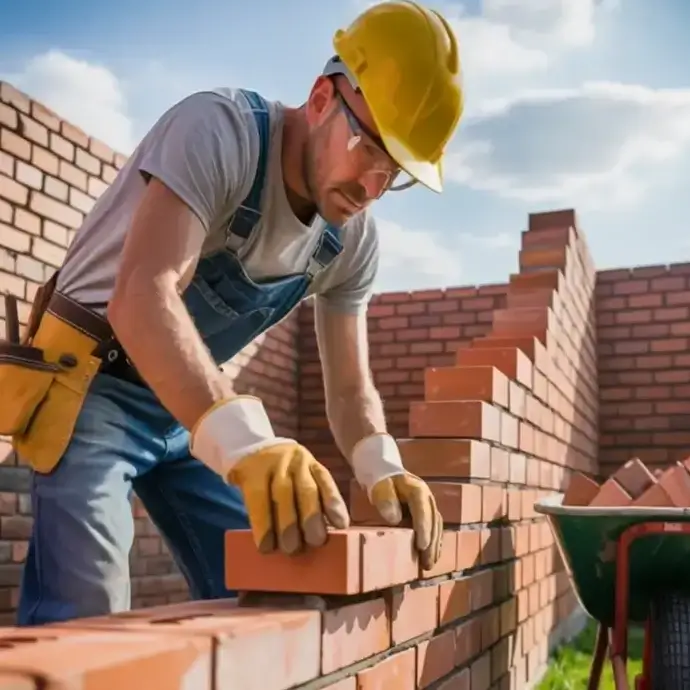


What H&S do bricklayers need?
Bricklayers and COSHH
Many people's first thought when considering bricklayer health and safety is working at height and falling objects. Yet, before a brick is laid, there can be many chemical risks that bricklayers can be exposed to, and some of these may include:
- Cement, mortar, concrete
- Brick acid
- Mortar dyes
- Lime, hydrated, hydraulic
- Silica, brick dust, concrete dust
- Asbestos, soffits, firebricks, asbestos cement, mortar, and verge tile under boarding
- Plasticisers
- Waterproof admixtures
Each of the substances a bricklayer might encounter could potentially cause harm, so a risk assessment for these substances is necessary. This type of assessment is very specific: it focuses not on a task that needs to be completed but on the substance being used. These assessments are called COSHH Assessments, which stands for Control of Substances Hazardous to Health.
A risk assessment considers the risks involved in performing a job or task, while a COSHH assessment addresses the dangers posed by substances. COSHH assessments don’t just evaluate potential risks when a substance or product is being used; they also cover other information, which includes:
- The name of the substance or product
- The suppliers or manufacturers' contact address and contact information
- Composition/information of hazardous chemicals/substances
- Hazard pictograms and relevant description of label elements
- PPE recommended during use
- Hazards to health when inhaled, ingested, or in contact with skin or eyes
- First aid procedures if inhaled, ingested, or in contact with skin or eyes
- Spillage and environmental, relating to disposal, storage and the effects the substance has on the environment and aquatic life
- Fire details, including extinguishing media and substance reaction in fire
The primary objective of the COSHH Regulations is to safeguard individuals from health risks associated with hazardous substances present in the workplace. These regulations mandate that employers conduct comprehensive risk assessments to identify potential hazards, implement effective control measures to mitigate these risks, and ensure the safe management and handling of hazardous substances.
COSHH is designed to prevent a range of occupational illnesses, including serious conditions such as lung disease, cancer, and skin disorders, which can result from prolonged exposure to harmful materials, including chemicals, dust, aerosols, and fumes. The framework encourages the adoption of best practices for maintaining a safe working environment, promoting employee training, and ensuring that appropriate personal protective equipment is used. Adhering to these regulations can significantly reduce the likelihood of environmental workplace incidents and health-related issues.
Bricklayers and Risk Assessments
A bricklayer needs a risk assessment to legally comply with health and safety regulations and to protect themselves and others by identifying, evaluating, and controlling the significant hazards associated with bricklaying, such as falls from height, manual handling injuries, exposure to hazardous dust and vibration, and cuts and burns from materials and tools. A risk assessment ensures safe working procedures are in place, reducing the likelihood of accidents, injuries, and long-term health conditions.
Employers must carry out risk assessments before starting work on construction projects, as required by various health and safety laws, including the Health and Safety at Work etc. Act 1974 and the Construction (Design and Management) Regulations 2015.
Some of the hazard identifications and controls may include:
- Work at Height: Bricklayers may work on scaffolding or at height on other access equipment, which can pose a risk of falling. Conducting a risk assessment helps identify potential hazards and supports the implementation of safe practices on scaffolds.
- Manual Handling: Lifting heavy bricks and materials is a major cause of injury for bricklayers. The assessment helps identify risks and decide whether mechanical aids are necessary or if work can be organised more safely.
- Hazardous Substances: Exposure to airborne dust from bricks, blocks, cement, and mortar can cause skin irritation, burns, and chronic respiratory conditions such as silicosis. A risk assessment identifies these hazards and ensures controls like dust suppression and the use of appropriate PPE are implemented.
- Equipment Hazards: Using power tools for cutting or mixing materials like cement mixers involves risks such as noise, vibration, and physical injuries. The assessment ensures the equipment is used properly and that suitable control measures are implemented.
- General Site Hazards: The assessment also takes into account common construction site hazards such as slips, trips, falls, and falling objects.
Bricklayers and Method Statements
A bricklaying method statement explains how a bricklaying task will be performed using safe working practices. It includes project details and specific task steps, with the key Components of a bricklaying method statement being:
- Project Details: Name, site address, start and end dates, and contact details for the project and company.
- Scope of Work: A description of the bricklaying tasks to be performed.
- Work Sequence: A step-by-step procedure, including pre-task, during-task, and post-task instructions.
- Tools and Equipment: A list of all necessary tools, such as trowels, levels, and brick cutters, and any specialised equipment.
- Personal Protective Equipment (PPE): Specific PPE is required for tasks like wearing hearing protection or safety glasses.
HSEDocs has compiled a comprehensive H&S package for bricklayers that can be found HERE.