
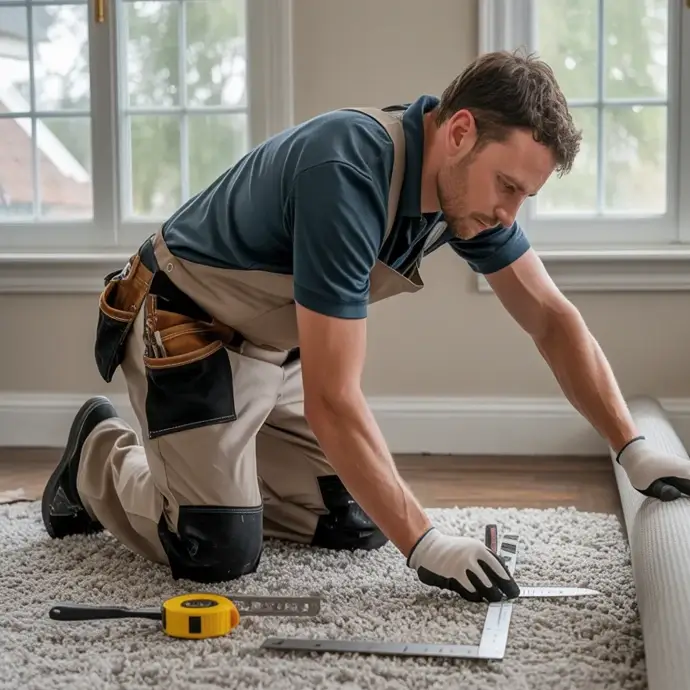


Introduction to Carpet Fitting H&S
At HSEDocs, we recognise that carpet fitters face specific health and safety challenges. While there aren't laws specifically targeting carpet fitting, general safety rules remain very important. It's crucial to protect not only workers but also clients and the business itself. We provide simple documents and online courses that comply with UK regulations, backed by over 20 years of experience.
Carpet fitting, whether for homes or businesses, involves risks such as lifting heavy materials and using sharp tools and glues. In this guide, we outline key health and safety considerations for carpet fitting and explain how our resources can help you efficiently meet safety requirements.
Staying safe is not just about avoiding accidents; it's also about maintaining a good reputation, avoiding legal trouble, and creating a healthy work environment. Both employers and self-employed fitters need to follow the Health and Safety at Work etc. Act 1974, which protects everyone affected by their work. Neglecting safety can lead to injuries, fines, and a damaged reputation, but our documents can help you manage these risks effectively.
Carpet fitting requires skill, physical strength, and specialised tools, making safety a priority to prevent injuries and ensure the work is done well. Prolonged kneeling, lifting heavy items, uneven surfaces, sharp tools, and exposure to chemicals all emphasise the importance of safe practices and the right equipment. By following solid safety standards, not only can we protect health but also enhance the quality of work and professionalism—benefiting everyone involved.
Common Risks in Carpet Fitting
Carpet fitting involves a variety of physical tasks that can put workers at risk. One major concern is the strain on the body from kneeling for long periods and lifting heavy materials. If proper techniques or support aren't used, these actions can lead to injuries like back pain and joint strain. Repeated movements during installations can worsen these problems, especially if workers don’t take enough breaks or use helpful tools.
Another risk is exposure to harmful materials. Dust from carpets and underlayers can make it hard to breathe, especially in small, poorly ventilated spaces. Additionally, some adhesives and chemicals used during installation can irritate the skin or cause allergic reactions. Not wearing protective gear, such as masks and gloves, can increase the risk of these issues.
The conditions at the worksite can also create safety problems. Uneven floors, cluttered areas, and poor lighting can lead to trips and falls. Tools like cutting knives can cause cuts or injuries if not used carefully. Lifting heavy or awkward carpet rolls without taking safety precautions can result in accidents or property damage.
To protect oneself, each worker must be aware of common hazards associated with carpet fitting which include:
- Manual Handling: Lifting and carrying heavy carpet rolls, underlay, and tools can lead to back injuries, strains, and sprains.
- Cutting Tools: Knives, trimmers, and other cutting equipment pose a significant risk of cuts and lacerations if not handled properly.
- Slips, Trips, and Falls: Uneven surfaces, loose materials, offcuts, and trailing cables can all contribute to slips, trips, and falls.
- Chemical Exposure: Adhesives, glues, and solvents used in carpet installation may contain hazardous chemicals that can cause respiratory issues, skin irritation, or other health problems.
- Dust and Debris: Cutting and fitting carpets can generate dust, which can be an irritant or exacerbate respiratory conditions.
- Working at Height: Some installations might require working on stairs or elevated platforms, introducing fall risks.
- Electrical Hazards: Working near power outlets or using electrical tools requires awareness of potential electrical shocks or circuit overloads.
- Ergonomic Issues: Prolonged kneeling, bending, and repetitive movements can lead to musculoskeletal disorders over time.
Addressing these risks effectively requires a systematic approach, which our documents and training courses are designed to provide.
PPE
Wearing the right safety gear is really important when fitting carpets to keep yourself safe and comfortable. Knee pads are a must-have because they help protect your knees if you're on the ground for a long time. Steel-toed boots are also essential; they protect your feet from heavy objects that might fall or bump into them.
Using good-quality gloves is helpful too. They keep your hands safe from sharp tools and sticky materials while also helping you grip things better. If you're working in a dusty area or with materials that make fine particles, wearing a dust mask is a smart choice. It keeps you from breathing in harmful dust that can cause long-term health issues.
Don't forget about protecting your eyes! Safety glasses can help prevent injuries from flying debris, especially when you're cutting or trimming materials. Wearing comfortable, flexible work clothes can also help you avoid accidents if your clothes get caught on tools or materials.
Some people find that wearing back support braces is beneficial when they frequently lift heavy carpet rolls or bulky items. It's essential to ensure all your safety gear fits well and is properly maintained to work effectively. Investing in the right protective equipment not only helps prevent injuries but also makes your workday more comfortable and productive.
Workplace Safety Practices
Ensuring safety during carpet fitting is very important and requires attention to a few key practices. One major aspect is keeping the work area tidy and safe. By ensuring tools, materials, and scraps are stored properly or disposed of, we can greatly reduce the risk of accidents like tripping and falling. Having clear and well-lit spaces is essential, especially when working with sharp tools or moving around on uneven floors.
Using the right tools is also critical. For instance, sharp carpet knives make cutting easier and safer because they require less force, helping prevent slips. It’s important to check that any power tools are in good working order before using them, since broken equipment can lead to injuries. Workers need to be careful about how they position themselves when cutting or moving carpets, ensuring that their hands and other body parts are away from sharp edges.
Teamwork is another important factor in keeping everyone safe. When lifting heavy carpet rolls, it’s best to work together to share the load. This helps prevent injuries from heavy lifting. It’s a good idea for team members to communicate clearly about their tasks and any potential hazards, keeping everyone aware and alert.