
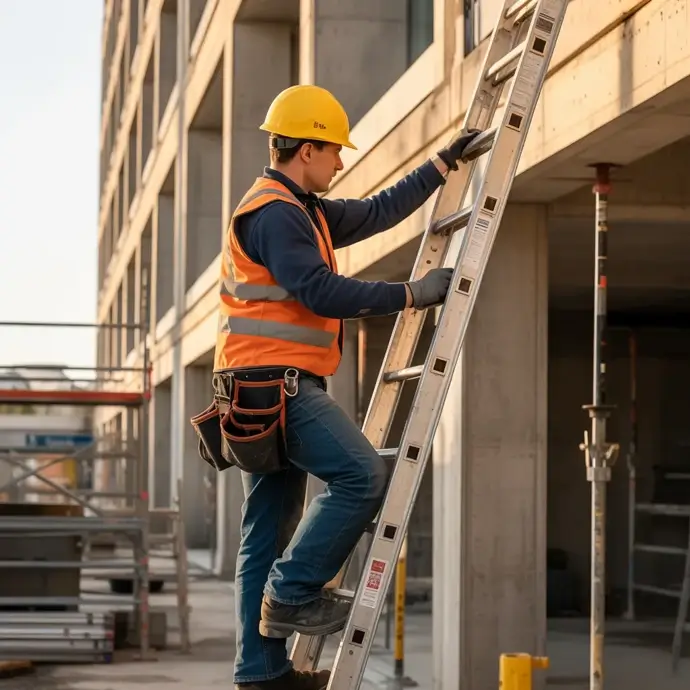


Working at Heights: Safety, Regulations, and Best Practices
Working at heights can be very dangerous, so it’s crucial to follow safety rules to prevent accidents. In the UK, there are important laws called the Work at Height Regulations 2005 that focus on keeping workers safe when working above ground level. These laws are designed to protect people from falling and ensure that any work at heights is carried out safely and carefully.
Legal Requirements and Employer Responsibilities
Under the Work at Height Regulations, employers must ensure that any work at elevated levels is carefully planned, well supervised, and carried out by trained individuals. The equipment used for these tasks should be appropriate for the job, regularly checked for safety, and kept in good working order. Additionally, employers are required to conduct detailed risk assessments to identify potential dangers and implement safety measures to reduce them.
Both employers and employees share responsibilities in this area. Employers need to provide thorough training, the right equipment, and a safe workspace. Meanwhile, employees must use the equipment as they were trained, follow safety guidelines, and quickly report any dangers they notice. Failing to comply with these rules can lead to legal consequences, financial penalties, and an increased risk of workplace accidents.
Key responsibilities include:
- Avoiding work at height when feasible: Tasks should be executed from ground level whenever possible to minimise risk.
- Preventing falls: Where working at height cannot be avoided, suitable measures—including proper equipment—must be implemented to prevent falls.
- Reducing the distance and severity of falls: Should fall risks remain, equipment such as nets or airbags should be deployed to limit both the distance fallen and potential injury.
What is working at heights, and why is it so hazardous?
This refers to any work activity where, if precautions were not taken, a person could fall a distance liable to cause personal injury. This definition, echoed by regulatory bodies, covers a wide range of tasks and environments. It’s not just about obvious situations like working on scaffolding or roofs; it also includes:
- Working on ladders or stepladders
- Accessing plant or machinery at height
- Working near an opening in a floor or a hole in the ground
- Working on a flat roof where there's a risk of falling from the edge
- Working over fragile surfaces
The inherent danger of working at heights stems from the risk of falling. Even a fall from a relatively low height can result in serious injuries, including fractures, head trauma, and even death. Common incidents often involve falls from ladders, scaffolds, or through fragile roofs. Contributing factors can include:
- Inadequate planning
- Lack of proper equipment or incorrect use of equipment
- Insufficient training
- Poor supervision
- Changing weather conditions
- Underestimation of risk
Best Practices for Safe Working at Heights
Working at heights can be very dangerous, and it's important to follow safety rules to protect everyone. In the UK, there are specific regulations, the Work at Height Regulations 2005, that set out what needs to be done to prevent accidents while working above ground level. These rules help protect workers from falls and ensure that any work at heights is carried out safely.
Employers have a big responsibility when it comes to working at heights. They need to plan the work carefully, supervise it properly, and ensure that only qualified people carry it out. Additionally, all the tools and equipment used must be suitable for the job, regularly checked, and maintained in good condition. Employers should also conduct thorough assessments to identify potential dangers and take steps to minimise them.
But it's not just employers who are responsible; employees also have a role to play. Employers must provide proper training, the right tools, and a safe place to work. On their part, employees need to use equipment correctly, follow safety instructions, and report any hazards they see. Ignoring these regulations can lead to serious consequences, including penalties and, more importantly, increased accident risk.
Falls are the most common cause of serious injuries and deaths when working at heights. Risks include unstable surfaces, incorrect use of ladders or scaffolding, lack of proper safety gear, and bad weather. Failing to plan properly or not following safety guidelines can have disastrous consequences, not just for those working at height but also for others nearby.
Safety, Regulations, and Best Practices
- Conduct Risk Assessments: Evaluate the potential hazards associated with working at height before beginning any task. Identify risks and implement control measures to reduce them.
- Use Proper Equipment: Ensure ladders, scaffolding, and personal protective equipment (PPE) such as harnesses are fit for purpose, in good condition, and compliant with safety standards.
- Provide Adequate Training: Train workers in equipment usage, hazard identification, and safety procedures. Proper training enables employees to perform their duties safely and efficiently.
- Inspect Equipment Regularly: Regularly check all equipment for wear, damage, or defects. Remove any faulty equipment from use immediately.
- Minimise Work at Height: Whenever possible, avoid working at height by employing alternative methods, such as using extendable tools or relocating tasks to ground level. If working at height is unavoidable, reduce the time spent in these conditions.
- Implement Fall Protection Systems: Use guardrails, safety nets, and personal fall arrest systems to enhance safety for workers.
- Monitor Weather Conditions: Adverse weather such as rain, wind, or ice can make height work more dangerous. Reschedule tasks if conditions pose significant risks.
- Supervise and Communicate: Effective supervision ensures that safety measures are followed, while clear communication helps prevent misunderstandings and mistakes.
Important Steps for Safe Work at Heights
Working at heights can be risky, but with the right approach, we can keep everyone safe. Here are some easy-to-understand steps to follow:
Plan and Assess Risks: Before starting any job that involves working high up, it’s important to think ahead. This means:
- Identifying what could go wrong.
- Figuring out who might get hurt and how.
- Deciding what safety measures need to be in place.
- Writing down what you found out and taking the necessary actions.
We provide simple templates that you can customise to fit your specific needs, making this process quicker and ensuring you cover everything important.
Choose the Right Equipment: It's crucial to select the right tools for the job when working at heights. Here’s a simple way to think about it:
- -Group Safety Equipment: This protects everyone nearby, like using scaffolding, guardrails, and safety nets.
- -Personal Safety Gear: This is for individual workers, such as harnesses and safety ropes.
Make sure all equipment is right for the task, checked regularly, and maintained properly. We have guides that explain how to use and take care of different equipment for various jobs.
Training and Skills: Everyone involved in working at heights should be properly trained and know how to do their jobs safely. This means they should understand the risks, know how to use the equipment correctly, and follow safe working methods. Our online course for getting a Working at Height Certificate covers all this in detail, helping your team learn quickly and earn their certification. With a high customer rating of 4.8 based on 570 reviews, you can feel confident in our training quality.
Supervision and Monitoring: Even with good planning and training, having someone supervise is key to maintaining safety. Supervisors need to be knowledgeable about height-related safety risks and should feel confident to step in if they see anyone working unsafely. Regular check-ins and reviews of procedures can help find areas for improvement and ensure ongoing safety.