
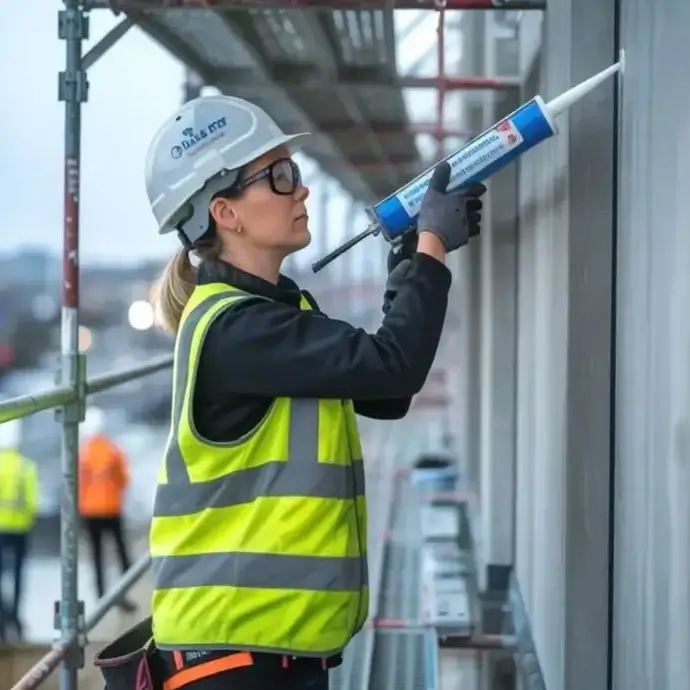


Having A Work at Height Course: Essential for Safety and Compliance
Training is a crucial component of occupational safety for industries where employees perform tasks at height, such as construction, manufacturing, and maintenance. The statistics demonstrate the importance of providing operatives with the correct knowledge: falls from heights consistently rank among the top causes of workplace accidents and fatalities, highlighting the need for training programs designed to address these risks.
The topics covered in height awareness training are comprehensive and diverse, covering essential elements such as legal requirements and regulations that govern safety practices, including specific guidelines from organisations such as OSHA (Occupational Safety and Health Administration) or local safety authorities. Trainees learn to recognise and assess the various hazards associated with work at height, such as unguarded edges, unstable surfaces, and adverse weather conditions.
A pivotal aspect of these courses involves learning about risk assessment processes, which enable participants to evaluate potential risks on-site and implement effective control measures tailored to their specific working environment. This includes practical strategies for using personal protective equipment (PPE), such as harnesses and helmets, as well as understanding the proper setup and use of scaffolding, ladders, and aerial work platforms.
To fully appreciate the importance of work at height training, it is essential to understand what is meant by "work at height." This term encompasses any activity where there is a potential risk of injury from a fall due to the ground being below the production area. Such activities include, but are not limited to, tasks where individuals might fall into excavations or pits from ground level, as well as scenarios where operatives are engaged in jobs on ladders, scaffolding, or elevated platforms such as scissor lifts or cherry pickers.
Work at height also involves maintenance and repair operations conducted on roofs and other elevated surfaces, where the risk of slips or falls can be significantly heightened due to environmental factors, such as weather conditions or the state of the work surface. To mitigate these risks, proper safety measures and precautions, such as the use of harnesses, guardrails, and fall arrest systems, need to be implemented, along with comprehensive training for all personnel involved in such activities.
Regulations Covered in a Work at Height Course
The key framework for employer duties and regulations which govern work at height in the UK is the Work at Height Regulations 2005 (WAHR).
These regulations are designed to ensure that all work performed at elevated levels is carried out safely to prevent accidents and injuries. The WAHR outlines clear responsibilities for employers regarding risk assessment, training, and providing suitable equipment.
In addition to the regulations set forth by the WAHR, there are specific supplementary controls for particular tasks and operations that require extra precaution. These detailed provisions may include guidelines for the use of ladders, scaffoldings, and harnesses, as well as requirements for conducting safety inspections and evaluations of work sites before any height-related tasks begin.
- HASAWA: The 1974 Health and Safety at Work Act lays down the general duties of employers and employees regarding work at height in the UK. Employers must ensure their employees' health, safety, and welfare to the extent reasonably practicable. In contrast, employees are obliged to take reasonable care of themselves and others who may be affected by their actions.
- The Work at Height Regulations 2005: The Work at Height Regulations 2005 provide specific requirements for managing work activities above ground level. These regulations emphasise the need to avoid work at height where possible through alternative means such as using platforms or extending tools rather than physically placing workers in hazardous positions.
- CDM: Besides the acts mentioned above, other legislation, such as the Construction (Design and Management) Regulations, may also apply depending on the work being carried out. These regulations impose additional responsibilities on designers, contractors, clients, and workers involved in construction projects.
- MEWP regulations: Mobile elevated working platform regulations are designed to establish guidelines for the safe use of these platforms and prevent accidents and injuries. The Health and Safety Executive (HSE) in the United Kingdom oversees the implementation of these regulations, ensuring that manufacturers comply with design standards and outlining operator training requirements to enhance safety.
Key Guidance Covered in Work at Height Regulations 2005 (WAHR)
The principal legal framework governing work at height in the UK is outlined in the Work at Height Regulations 2005 (WAHR). This essential legislation emphasises the importance of minimising risk and safeguarding individuals engaged in tasks at elevation. The regulations mandate that work at height should be avoided whenever feasible. If it is necessary to perform such work, it must be meticulously planned, organised, and supervised to prevent falls and enhance overall safety effectively.
Key Legal Requirements Under WAHR include:
- Risk Assessment: A comprehensive risk assessment must be conducted before any work at height. This involves identifying potential hazards and evaluating risks associated with the specific task. Control measures must be developed and implemented to mitigate these risks, ensuring a safer working environment.
- Avoidance: The foremost principle of the WAHR is to avoid work at height wherever reasonably practicable. Employers and safety professionals should seek alternative solutions that eliminate the need for working at elevation, such as using extended tools or performing tasks from the ground.
- Planning and Supervision: Any work at height must be thoroughly planned and organised, taking into consideration the specific conditions of the task location. This includes establishing protocols for supervising activities to ensure that all personnel involved are adequately trained and capable of recognising hazards.
- Competence: Individuals involved in work at height—be they organisers, planners, or supervisors—are required to possess suitable qualifications and experience. If they are not competent themselves, they must be supervised by someone qualified. This is to ensure the safety of all personnel at the site.
- Equipment: All equipment utilised for work at height, such as ladders, scaffolding, and harnesses, must be appropriately selected based on its suitability for the job. It should be stable, robust, and capable of supporting the anticipated loads. Regular inspections and maintenance of this equipment are crucial to ensure functionality and safety.
- Weather Considerations: For outdoor work at height, it is essential to take into account prevailing weather conditions that could pose risks to safety. Factors like high winds, rain, ice, or snow must be carefully assessed to determine whether work should proceed, be modified, or postponed.
- Management of Fragile Surfaces: Any risks associated with working on or near fragile surfaces, such as glass, roof lights, or thin materials, must be managed effectively. This includes using appropriate protective measures and ensuring that all personnel are aware of the potential dangers.
- Falling Objects: Precautions should be established to prevent tools, materials, or debris from falling and potentially injuring individuals below. This may involve the use of toe boards, mesh netting, or designated drop zones to enhance safety.
- Hierarchy of Controls: A systematic hierarchy of controls must be adhered to when addressing risk. This process begins with the elimination of hazards, followed by the implementation of measures to prevent falls (such as guardrails and safety nets), and finally, the use of personal protective equipment to mitigate the consequences of falls when they cannot be entirely avoided.
- Emergency Procedures: It is vital to have clearly defined emergency evacuation and rescue procedures in place. These should be communicated to all personnel involved, ensuring that everyone understands the steps to take in the event of an incident, thereby protecting their safety and well-being.