


What Should Employees Do If They See A Spill?
When workers encounter a workplace spill, it’s important to follow specific steps to ensure everyone’s safety. The main goals are to keep all individuals safe, contain the spill if possible, and report the situation right away. Here’s a simple step-by-step guide to follow:
STOP, LOOK, and LISTEN
- Stop: Immediately halt any movement toward the spill. Avoid walking through, touching, or smelling the substance, as this could be dangerous.
- Look: Carefully observe the spill:
- Identify the substance if you can by checking any labels or safety sheets.
- Assess how big the spill is and whether it’s spreading or contained.
- Notice any visual signs such as colour changes or unusual reactions. - Listen: Be aware of any sounds that might indicate danger, such as hissing, which could mean a gas leak.
Other Steps
- Assume Danger: If you don’t know what the substance is, treat it as if it could be harmful.
- Alert Others: Alert others and secure the area.
- Shout: Warn others nearby by calling out loudly to keep them away from the spill.
- Cordon Off: Quickly create a secure area around the spill using warning signs or cones to keep people away.
- Evacuate: If the spill is large or hazardous, carefully guide everyone out of the area using the safest routes.
Report the Spill
- Inform: Immediately tell a supervisor or a safety officer about the spill. Provide them with key details, such as the substance and the seriousness of the situation.
- Call Emergency Services: If the spill is significant or hazardous, don’t hesitate to contact emergency services.
Contain the Spill (If Safe and Trained)
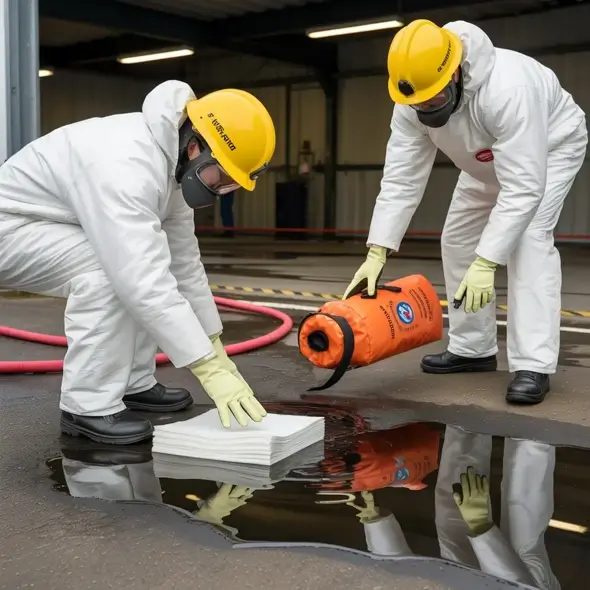
- Wear Safety Gear: If you’re trained to do so, put on gloves and protective gear from the spill kit to stay safe.
- Stop the Source: If it’s safe, try to stop the source of the spill by turning off equipment or closing leaks.
- Contain the Spread: Use materials from the spill kit, like absorbent pads or sandbags, to surround the spill and prevent it from spreading.
Clean and Dispose (If Safe and Trained)
- Use Absorbents: Apply absorbent materials over the spill, working from the outer edges inward to absorb the spill.
- Proper Cleanup: If it’s a chemical spill, use the right cleaning agents as advised on safety sheets. Use wet wipes or vacuum up dust instead of sweeping, which can spread harmful materials.
- Dispose of Contaminated Materials: Collect all used materials and protective gear. Place them into special hazardous material bags and label them clearly.
Decontaminate and Report
- Clean the Area: After cleaning the spill, wash the area with a suitable cleaner to remove any residue.
- Wash Up: Clean your hands and any skin that came into contact with the substance with soap and water to prevent health issues.
- File a Report: Record the spill details in a central log, including what the substance was, how much there was, what actions were taken, and when it happened. This documentation is important for safety compliance and future reference.
Important Note:
If the spill poses serious hazards, such as toxic gases or fire risks, or if the situation is beyond your training, do not attempt to clean it up yourself. Evacuate the area and wait for professionals to handle the situation. Always put safety first!