
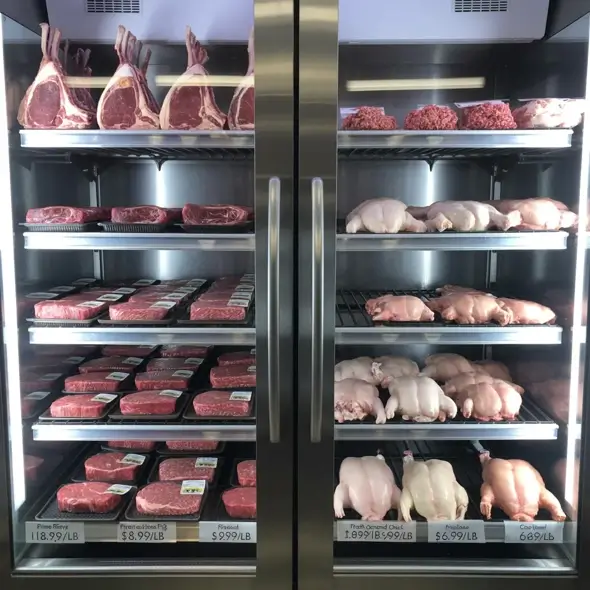


How Should Raw Meat Be Stored In The Fridge?
Properly storing raw meat is crucial for maintaining food safety and minimising the risk of contamination. Raw meat can harbour harmful bacteria, and correct storage helps prevent the spread of these germs. It's essential to keep raw meat below 40°F (4°C) to inhibit bacterial growth. Use airtight containers or heavy-duty plastic wrap to prevent juices from leaking and contaminating other foods. Additionally, it's best to store raw meat on the bottom shelf of the refrigerator to avoid cross-contamination with other items. For long-term storage, consider freezing the meat and ensuring it’s well wrapped to prevent freezer burn. Here are some easy tips to follow when you store raw meat, chicken, and fish in your fridge:
- Location: Always place raw meat on the bottom shelf of the fridge. This way, any juices that might leak won’t drip onto other foods, especially ready-to-eat meals.
- Keep It Covered: Keep raw meat, chicken, and fish in sealed containers. If you don’t have containers, you can wrap them tightly in cling film or aluminium foil. This helps keep any liquids in and stops other foods from picking up strong smells.
- Right Temperature: Your fridge should be set to 5°C (41°F) or lower. The best range is between 1°C and 4°C (34°F to 39°F) to prevent bacterial growth. It’s a good idea to check your fridge thermometer regularly.
- Separate Storage: Always keep raw meat away from cooked food and ready-to-eat items. Store it at the bottom of the fridge, away from the sides, so it doesn't touch anything else.
- Check Expiry Dates: Look at the 'use by' date on the packaging. Eating or freezing meat past this date can be unsafe. You might want to mark your calendar or set reminders for items that need to be eaten soon.
- Best Practices: When you buy raw meat, keep it in its original package until you’re ready to cook it. If you get it from a butcher, put it in a clean container to avoid any leaks that could make your fridge messy.
- Thawing: If you need to thaw frozen meat, do it in the fridge on the bottom shelf. This keeps the meat at a safe temperature and stops juices from leaking onto other foods.
- High-risk Items: If possible, use a separate fridge for items like raw chicken, which can harbour more bacteria. If you have to use the same fridge, keep these items in completely separate containers.