
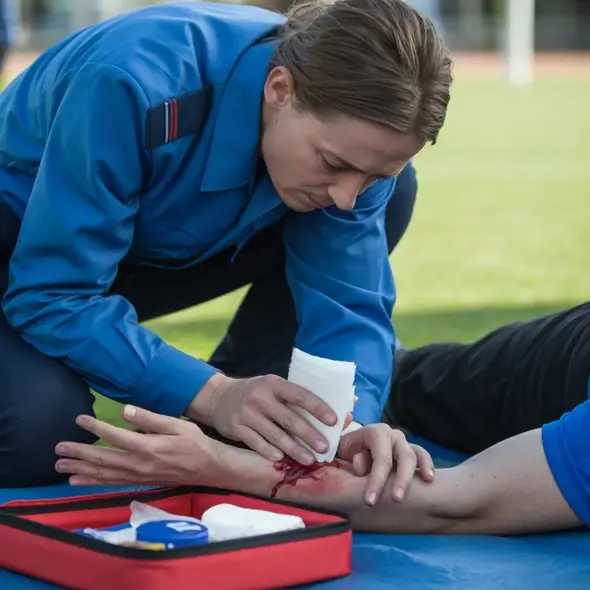


How Do You Treat A Major Bleeding Wound?
When dealing with a serious bleeding wound, it’s important to act quickly and carefully. Here’s a simple guide to help you provide the best care until help arrives:
Immediate Steps to Take
- Call for Help: If you spot a severe bleeding injury, call emergency services right away (999 in the UK or 911 in the US). Be clear about where you are and how serious the injury is.
- Apply Pressure: Use a clean cloth, bandage, or even your hands (wear gloves if you can) to press directly on the wound. This pressure is essential to slow down or stop the bleeding. Keep the pressure steady and don’t lift the cloth to check on the blood flow.
- Don’t Remove Bloodied Dressings: If the cloth you’re using becomes soaked with blood, don’t remove it. Just add more clean cloths on top while continuing to apply pressure. Taking off the soaked cloth can make things worse by breaking any clots that might be forming.
Additional Helpful Tips
- Position the Person: If you can, lay the injured person flat on the ground. If it's a bleeding arm or leg, raise that limb above the heart level to help slow down the bleeding.
- Handle Any Embedded Objects Carefully: If something is stuck in the wound, don’t try to pull it out. Just apply pressure around the object without touching it directly. Removing it could make the bleeding worse.
- Watch for Signs of Shock: Keep an eye out for signs of shock, such as weakness, confusion, rapid breathing, or a weak pulse. Cover them with a blanket to keep them warm and talk to them calmly to help ease their worries.
- Use a Tourniquet if Necessary: If the bleeding is really severe and won’t stop with pressure, and it’s from an arm or leg, you might need to use a tourniquet. Place it above the wound (closer to the body) but not over a joint. Make it tight, and remember the time you put it on, as this information will be helpful for medical responders.