
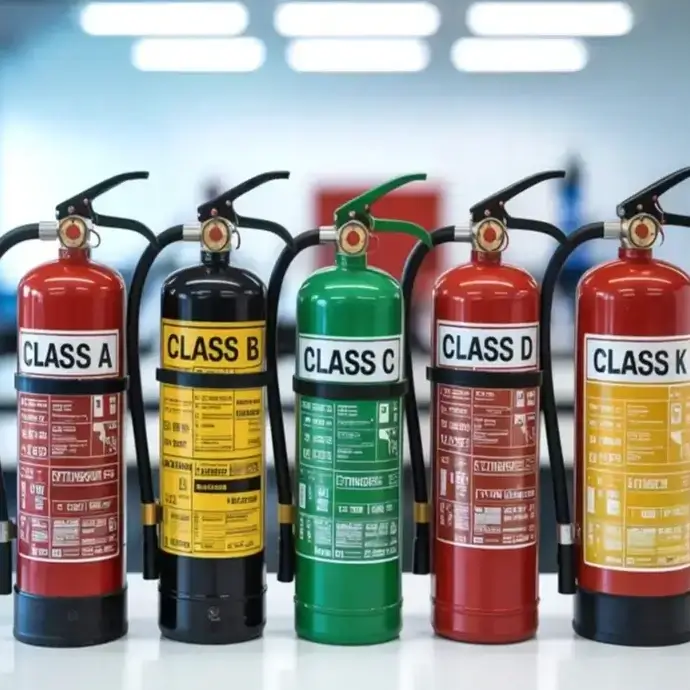


Different Types of Fire Extinguishers and Their Usage
Different types of fire extinguishers are designed to tackle specific classes of fire, and using the wrong type can be ineffective or even dangerous. Knowing which extinguisher to use for different fires—such as water, foam, powder, wet chemical, or carbon dioxide—can make a crucial difference in controlling a fire safely and quickly.
Each extinguisher contains an agent suited to particular fire sources, whether they involve solid combustibles, flammable liquids, electrical equipment, or cooking oils.
Understanding Fire Extinguisher Classes
Fire types are categorised based on the materials involved and the nature of the combustion. This classification helps determine which extinguisher is appropriate for tackling each type of fire safely and effectively.
Class A: Ordinary Combustibles
Class A fires involve common combustible materials, such as wood, paper, cloth, and certain plastics. These materials burn with flames and leave ash. Extinguishers for Class A fires typically use water or foam to cool the burning material and reduce heat.
Water-based extinguishers are effective because they absorb heat and suppress flames. Foam extinguishers can also smother the fire and prevent it from reigniting. It is essential not to use water on electrical fires or flammable liquid fires, as this can cause greater danger.
Class B: Flammable Liquids
Class B fires involve flammable liquids such as petrol, oil, paint, and solvents. They burn differently from solid combustibles, producing vapours that ignite easily. Extinguishers designed for Class B fires primarily work by smothering the flames or breaking the fire’s chemical chain.
Foam, powder, and carbon dioxide (CO₂) extinguishers are suitable for these fires. Foam creates a barrier to prevent oxygen from reaching the liquid, while CO₂ displaces oxygen. Using water on Class B fires is dangerous because it can spread the flammable liquid and worsen the fire.
Class C: Electrical Fires
Class C fires involve energised electrical equipment such as wiring, appliances, and circuit breakers. Water-based extinguishers should never be used due to the risk of electric shock. The goal is to cut off the electrical current and smother the fire.
Carbon dioxide (CO₂) and dry powder extinguishers are most effective for Class C fires. CO₂ removes oxygen and cools the fire without leaving a residue, making it suitable for use around sensitive electrical equipment. Dry powder interrupts the chemical reaction but can leave residue that may damage electronics.
Class D: Metal Fires
Class D fires involve combustible metals, such as magnesium, aluminium, and sodium. These fires burn at extremely high temperatures and react violently with water or other common extinguishing agents. Specialised extinguishers are required.
Class D extinguishers use dry powders specifically formulated to absorb heat and smother metal fires. These powders separate the fuel from oxygen without causing chemical reactions. Using other types of extinguishers on metal fires risks intensifying the blaze or causing explosions.
Class F: Cooking Oils and Fats
Class F extinguishers are essential for fires involving cooking oils and fats, commonly found in commercial kitchens. They use a wet chemical agent that cools the flames and creates a soapy foam on the surface, preventing re-ignition.
These extinguishers work by saponification, turning oil into a non-flammable layer. Water-based or powder extinguishers are unsuitable here, as they can spread the burning oil or worsen the fire. Class F extinguishers typically have a yellow identifying label.
They must be positioned near cooking appliances and maintained regularly to ensure readiness. Using the correct extinguisher decreases risk and limits damage in kitchens.
Water Mist Extinguishers
Water mist extinguishers release very fine water droplets which cool fire and reduce oxygen near the flames. They are safe for use on Class A fires (solids) but also effective on Class F fires and electrical fires due to their non-conductive mist.
This extinguisher type is versatile in areas with varied fire risk, especially where electrical equipment is present. The fine mist limits water damage compared to conventional water extinguishers and can be used around sensitive materials.
Water mist extinguishers have a white label and must be maintained in accordance with safety standards. They are often employed in environments like offices, museums, and healthcare facilities.
Clean Agent Extinguishers
Clean agent extinguishers utilise gases such as FM-200 or inert gases to suppress fires by interrupting the chemical reaction of flames, leaving no residue. They are ideal for sensitive electronic equipment rooms or data centres where water damage is unacceptable.
These extinguishers effectively handle Class B and C fires, leaving no cleanup requirements and preserving delicate equipment. Their operation is quiet and fast, making them preferable in environments where fire suppression must avoid collateral damage.
Clean agent extinguishers require regular inspection and expert maintenance due to their specialized gas contents. They usually feature blue or black labels depending on the agent.
Choosing the Right Fire Extinguisher
Selecting the appropriate fire extinguisher depends on understanding the specific fire hazards present. It involves evaluating the environment and the substances involved in potential fires. This ensures the extinguisher used will be effective and safe.
Assessing Fire Risks
The first step is to identify the types of fire risks in a given area. For example, kitchens often pose risks related to cooking oils and fats, while offices may present hazards associated with electrical equipment. Each fire type is classified as A (solids), B (flammable liquids), C (gases), D (metals), and F (cooking oils).
It is important to recognise that different classes require different extinguisher agents. A thorough assessment considers the materials, machinery, and substances in the vicinity. This assessment helps in positioning extinguishers where they are most needed and ensures compliance with safety regulations.
Matching Extinguisher to Hazards
Once risks are identified, the extinguisher type should match those hazards. For example, a Class A fire involving wood or paper requires a water or foam extinguisher. Flammable liquids (Class B) need foam, powder, or CO2 extinguishers. For electrical fires, CO2 or dry powder extinguishers are suitable because they do not conduct electricity.
Wet chemical extinguishers are specifically designed for Class F fires, such as those involving cooking oils in commercial kitchens. Using the wrong extinguisher can worsen the fire or cause injury. Clear labelling and colour codes help users quickly select the correct extinguisher during an emergency. Proper training reinforces this match.
Proper Usage of Fire Extinguishers
Using a fire extinguisher effectively requires familiarity with specific techniques and proper positioning. The user must act quickly while maintaining control to prevent the fire from spreading or reigniting.
P.A.S.S. Technique Explained
The P.A.S.S. fire extinguisher technique is a standard method for operating most portable fire extinguishers safely and efficiently.
Pull the pin to unlock the operating lever.
Aim the nozzle at the base of the fire where the fuel source is located.
Squeeze the lever slowly and evenly to release the extinguishing agent.
Sweep the nozzle from side to side across the base of the fire until it is fully extinguished.
This method helps target the core of the fire, maximising the extinguisher’s effectiveness while minimising the risk of spreading flames.
Positioning and Distance
The correct stance and distance from the fire are crucial to effective extinguishing. The user should stand approximately 1.5 to 3 metres away to maintain control and personal safety.
The extinguisher should be aimed low at the fire’s base, not the flames. Remaining low and maintaining an escape route is vital in case the fire grows unexpectedly.
Moving closer gradually as the fire diminishes allows better control while minimising exposure to smoke and heat. Avoid turning your back on the fire during attempts to extinguish it.
Maintenance and Safety Considerations
Proper upkeep of fire extinguishers is essential to ensure they function correctly in an emergency. Regular inspections and adherence to legal standards help maintain effectiveness and compliance.
Inspection and Servicing
Fire extinguishers require routine checks to confirm they are ready for use. Monthly visual inspections should look for signs of damage, including dents, corrosion, or leaks. The pressure gauge must be checked to ensure it remains within the green zone.
Annual servicing by a qualified professional is necessary. This includes internal examinations, recharging, and replacing worn parts. Records of all inspections and maintenance should be kept as evidence.
Users should also confirm the extinguisher is suitable for the specific fire risk present. Incorrect use or failure to maintain the extinguisher can reduce safety and effectiveness.
Legal Requirements in the UK
UK law mandates that fire extinguishers in workplaces and commercial premises receive regular maintenance. Employers are responsible for ensuring that extinguishers are inspected at least once every 12 months by a competent person.
The Regulatory Reform (Fire Safety) Order 2005 requires businesses to keep fire-fighting equipment in good working order. In addition to professional servicing, employers must carry out periodic in-house checks.
Failure to comply with these legal requirements can result in penalties and increased risk of harm. Fire extinguisher maintenance must align with British Standards such as BS 5306-3 for fire extinguisher maintenance in the UK.
Conclusion
Understanding the different types of fire extinguishers is essential for effective fire safety. Each extinguisher is designed for specific fire classes and fuels, so using the right type ensures the fire is controlled safely and efficiently.
Choosing the appropriate extinguisher depends on the environment and potential fire risks. For example, water extinguishers are suitable for solid combustibles but unsafe for electrical fires, while CO2 extinguishers are ideal for electrical and flammable liquid fires.
Regular maintenance and proper placement of extinguishers, as per regulations, support readiness in emergencies. Training individuals in their proper use further enhances safety and minimises risk.