


Fire Extinguisher Types
Introduction to Fire Extinguishers
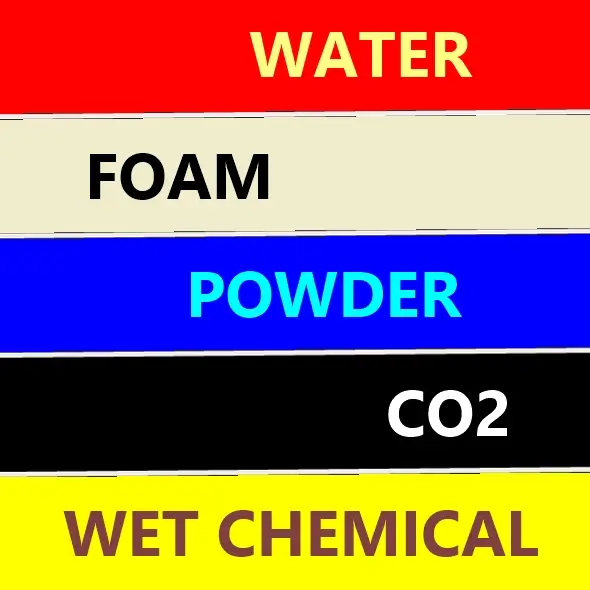
UK fire extinguishers are categorised by the materials they can extinguish, making it important to select the right type for each situation. Using the wrong extinguisher can be ineffective or dangerous. Different extinguishers use distinct suppression methods, and choosing the right one can minimise damage and enhance safety. Familiarising yourself with the various types ensures proper protection in residential, commercial, or industrial settings. All modern UK extinguishers have a red body with a colour-coded name tag band to indicate the type.
Water-Based Extinguishers
- RED is for water-based extinguishers:
These are straightforward and effective options for addressing fires fueled by ordinary materials like wood, paper, and fabrics. By cooling the burning substance, these extinguishers help to stop the fire’s heat source. This makes them particularly useful in environments where these materials are common, such as offices, schools, or homes.
Water-based extinguishers should not be used on electrical equipment fires, as water conducts electricity and could cause severe injury or further damage. Similarly, they are ineffective against fires fuelled by flammable liquids or gases, which require extinguishers designed specifically for those risks.
Foam Extinguishers
- CREAM is for foam:
Foam extinguishers are particularly effective for flammable liquid fires, such as petrol or oil. By forming a thick layer of foam, these extinguishers cut off the fire's access to oxygen while cooling the burning material's surface. This dual action helps to suppress flames quickly and reduce the risk of re-ignition. Foam extinguishers are also suitable for certain solid material fires, offering a degree of versatility in their application.
It is important to avoid using foam extinguishers on electrical fires, as the liquid content can pose safety risks when it comes into contact with live circuits.
To use a foam extinguisher effectively, aim the nozzle at the base of the fire, and apply the foam in a sweeping motion to ensure full coverage. For liquid fires, it’s essential to avoid spraying directly into the liquid, as this could cause splashing and spread the flames.
Powder Extinguishers
- BLUE is for powder:
Powder extinguishers are a reliable option for addressing a range of fire types, including those involving solid materials, flammable liquids, and gases. They are particularly valued for their ability to combat fires quickly in environments with mixed risks. The powder works by interrupting the chemical reactions that sustain the fire, effectively stopping its spread.
One of the key benefits of powder extinguishers is their adaptability, making them suitable for indoor and outdoor use. They are often found in workshops, factories, and garages, where a variety of fire hazards may be present. While these extinguishers are highly effective, the powder they emit can reduce visibility during discharge, potentially complicating evacuation or firefighting efforts in enclosed spaces. Additionally, inhaling the discharged powder can pose health risks, so proper protective measures should be taken.
To use a powder extinguisher effectively, aim the nozzle at the base of the flames and apply the extinguishing agent in controlled bursts. This method ensures the powder is distributed evenly, maximising its fire-suppressing capabilities.
Carbon Dioxide Extinguishers
- BLACK Is for CO2:
Carbon dioxide (CO2) extinguishers are highly effective for fires involving electrical equipment and flammable liquids. They suppress fires by displacing the oxygen that fuels combustion, creating an environment where the fire cannot sustain itself. One distinct advantage of CO2 extinguishers is that they leave no residue, making them ideal for protecting sensitive devices such as computers, control panels, and other electronics.
During use, CO2 is released in a gaseous state under high pressure, which can cause the surrounding area to become extremely cold. Direct skin contact with the discharge or the nozzle should be avoided, as it can lead to cold burns. The rapid release of the gas can also temporarily lower oxygen levels in confined spaces, so proper ventilation and caution are necessary, especially in enclosed areas.
To deploy a CO2 extinguisher, aim the horn at the base of the flames to ensure a controlled, steady discharge. The horn is specifically designed to manage the pressure of the released gas and guide it effectively toward the fire.
Wet Chemical Extinguishers
- YELLOW is for wet chemical:
Wet chemical extinguishers are engineered to tackle fires involving cooking oils and fats, often encountered in commercial kitchens and food preparation areas. These extinguishers operate by discharging a fine mist of chemical solution that reacts with the burning oil to form a thick, soap-like layer. This reaction cools the surface and cuts off the oxygen supply, effectively smothering the flames and preventing the fire from reigniting.
When using a wet chemical extinguisher, it is essential to aim the nozzle precisely at the source of the fire to ensure the chemical agent is applied evenly over the burning material. The mist helps to reduce the risk of hot oil splashing, which could spread the fire or cause injuries. Wet chemical extinguishers often include extended nozzles, allowing for safer application from a reasonable distance.