
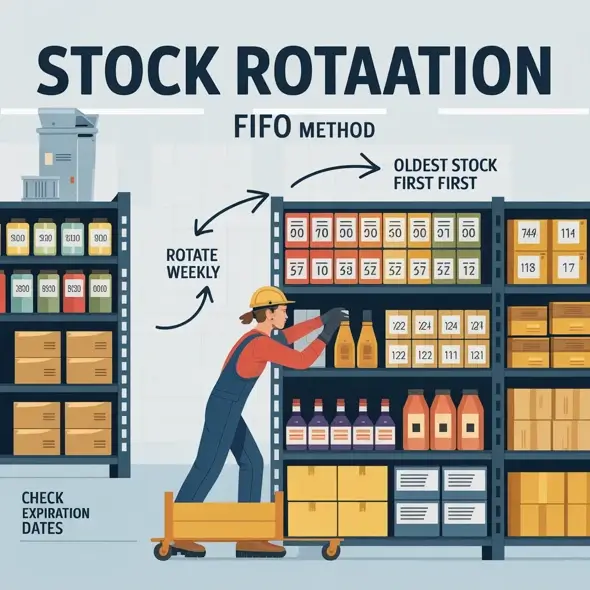


The Correct Method for Stock Rotation and Food Storage
Correct stock rotation is designed to keep food fresh and in date, ensuring older stock is used first before its expiration date, while new deliveries are stored behind. There should be a cycling stock rotation for each delivery, or for foodstuffs as they approach expiry.
To manage inventory, ensuring products are used or sold in the appropriate order is key to maintaining their quality and reducing waste. Stock rotation is designed to organise and manage foodstuffs efficiently, helping prevent the risks associated with expired or perishable items. Properly executed, it ensures that foodstuffs are in optimal condition upon reaching the consumer.
Understanding FIFO
FIFO, an acronym for "First In, First Out," is an inventory management technique designed to ensure that the oldest stock is used or sold before newer stock. This method is crucial for industries that handle items with a limited shelf life, such as food and beverages. By following FIFO, businesses can minimise spoilage, maintain product integrity, and uphold regulatory standards for shelf life, safety, and quality.
The system operates on a straightforward principle: items received first are used or sold first. To implement FIFO effectively, stock must be organised so that older items are shelved at the front, and newer items are shelved behind them. Clear labelling must also be used for items such as allergens, which may be stored in sealed containers and not in the original packaging. If this is the case, the dates of receipt or expiration must be added to the containers' labels to support accurate use-by and expiry dates.
Shelf hierarchy
As a general rule, shelves that are above average eye height are narrower than their lower counterparts. This is because you wouldn’t be able to see what was at the back of a deep, high-level shelf. Consequently, the top shelves can be reserved for lightweight goods. Additionally, it is always best to store packaged goods at higher levels because there is a lower risk of contamination at higher levels.
So a good rule of thumb for top shelves is:
- Spices and Herbs: This can include dried herbs, compact spice containers, or unique seasoning blends.
- Lightweight Packaged Goods: You might choose cereals, granola bars, crackers, or snack boxes.
- Daily Essentials: Items such as tea bags, coffee jars, and commonly used condiments.
Bottom shelves tend to be stronger and deeper and are ideally suited to:
- Bulk Pantry Staples: Items such as large quantities of rice, flour, sugar, or oversized canned goods.
- Bottles and Liquids: Bottled products, including oil, vinegar, wine, and spirits.
- Vegetables/Produce: Potatoes, onions, tubers.
Above all, when storing food, the risk of cross-contamination must be avoided by storing food in sealed containers to prevent foreign objects, bacteria, allergens and chemicals from entering the food chain.
Proximity storage.
Certain fruits and vegetables can produce ethylene gas, a natural plant hormone that plays a crucial role in regulating growth and ripening. When stored together, ethylene-sensitive produce can undergo rapid ripening, leading to accelerated decay and spoilage.
Mixing ethylene-producing fruits (such as apples, bananas, cantaloupe, and tomatoes) with ethylene-sensitive items (such as lettuce, broccoli, and carrots) can lead to problematic interactions. Ethylene gas can cause these sensitive items to wilt or spoil more quickly than anticipated, compromising their freshness and quality.
To prevent these adverse effects, it is essential to store ethylene producers separately from sensitive produce. For example, apples—known for their significant ethylene production—should be kept at least 6 to 8 inches away from other fruits and vegetables that are more sensitive to ethylene exposure. By creating this spatial barrier, you can help maintain the optimal freshness and shelf life of both types of produce.
A frequent oversight in food storage is placing onions and potatoes together. This pairing can lead to undesirable results, as onions emit gases that trigger potato sprouting, causing premature germination. To ensure that both ingredients remain in peak condition for use, it’s advisable to store them in separate areas.
Suitable storage unit.
Of course, there is no point in following storage guidelines for stock rotation if the storage unit isn’t fit for purpose, and some considerations include:
An adequate airflow helps prevent unwanted conditions, such as stagnant, warm, and humid air, which can speed up food spoilage, promote mould growth, and attract pests. If ventilation is lacking, moisture isn't removed, and temperature isn't controlled, the larder becomes an ideal place for bacteria and fungi to thrive.
Store foods at least 150 mm off the floor to allow for adequate floor cleaning and prevent pest infestations, with dry food being kept away from exterior walls to prevent moisture damage
When specifying flooring materials, prioritise options with non-slip properties to promote safety, particularly in moisture-prone environments. Non-absorbent choices such as epoxy flooring or quarry tile are recommended for their durability and ease of maintenance.
For walls and ceilings, surfaces should be smooth and robust to facilitate efficient cleaning and upkeep. Select washable materials capable of withstanding frequent scrubbing without deterioration, as compromised finishes may accumulate contaminants.
Insulation must also be carefully considered. High-performance insulation is vital for maintaining stable temperatures, preventing moisture accumulation, and enhancing air quality.